A Fish You Cannot Keep Cold Is Not a Meal Yet
Turn legal access to water into food you can eat tonight or keep without pretending the freezer always runs --- for piers, creeks, and the coast.
R.T. Fagan
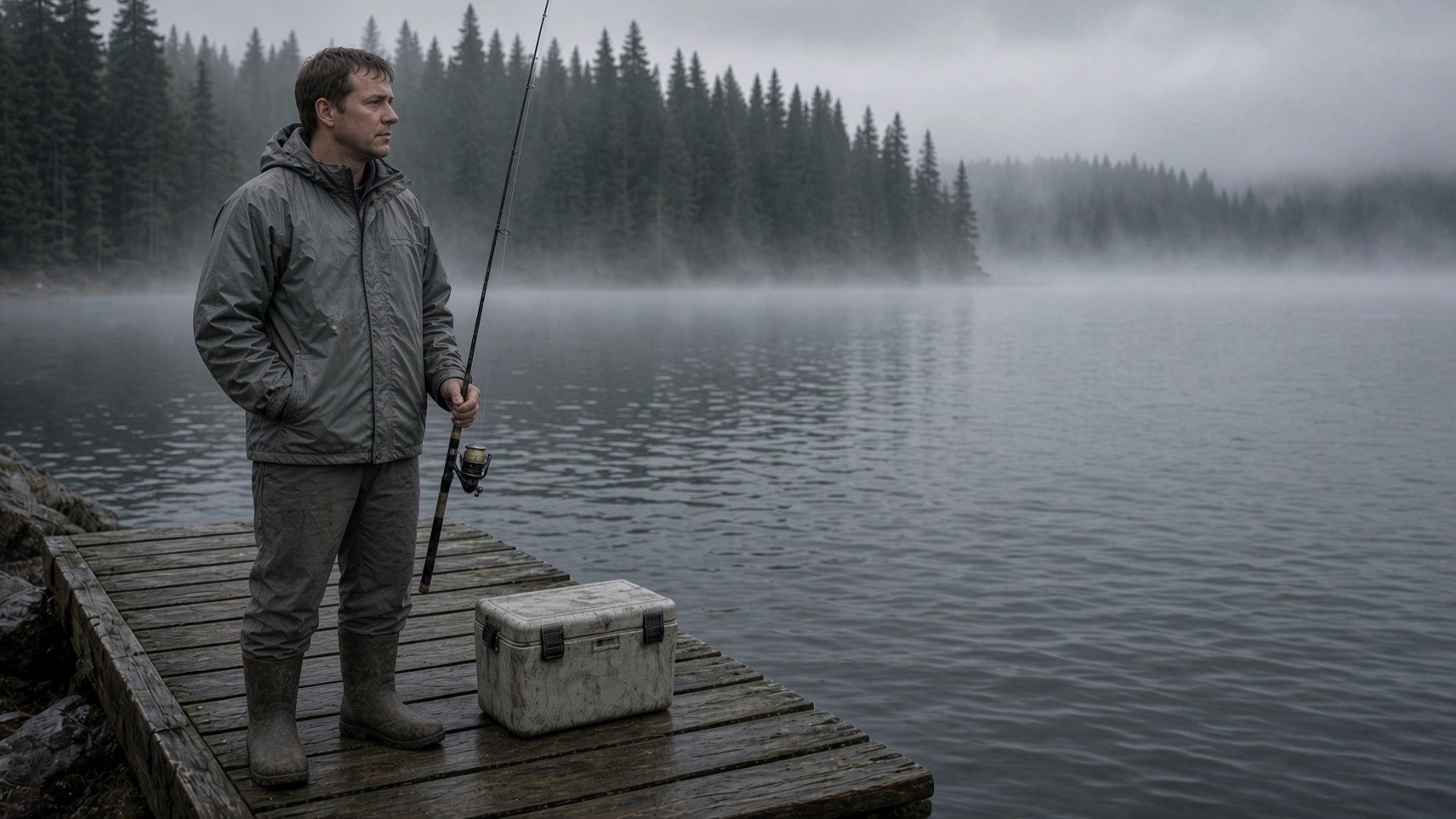
A rod on the wall is not a food path. A fish on a stringer in July heat is a timer.
That is the part fishing culture skips when it talks like preparedness. People buy tackle. They talk about the river they mean to learn. They do not buy the license, do not check the advisory on the urban lake, and do not have a way to keep a legal catch out of the danger zone if the power is out. Night one of a long outage does not grade your lure collection. It grades whether you can turn water you can actually reach into a meal that will not put anyone in the bathroom.
This article has one job: decide if fishing is your first calorie path, and if it is, build the short chain from access to plate --- license, water you already use, cooling, and a preservation method you have practiced.
Bottom line up front
Fish if the water is already in your life. Do not fish as a personality.
You need a current license, a place you may keep what you catch, a plan for heat, and a kitchen step you can finish the same day. Freshwater and saltwater change the access and the species. They do not change the chain: legal take, clean handling, cold or preserve, then cook.
If you only do one thing this week: confirm your license, name the nearest water you can reach without a fantasy commute, and write how you would cool or cook a fish if the fridge were a box. If you cannot name those three, fishing waits. Garden first.
Access is the whole first question
Fishing looks portable. It is not. The water is either in your week or it is a trip.
Urban. Piers, city lakes, stocked ponds, tidal walks, a river through town. The questions are posted hours, a fishing license, whether you may keep the fish, and water quality. Many city waters are catch-and-release by rule or by common sense after a contamination advisory. A posted industrial canal is not a protein strategy. A pier you can reach on foot after work is.
Rural. Creeks, lakes, a sound, a farm pond you have permission to use. Distance still counts. A coastal run that needs a boat you do not keep ready is recreation. A creek you can walk to from the ridge in an hour is a path.
Write the water down. Drive time. Walk time. Seasonal closure. If the answer depends on a friend with a boat who has not called you back in a year, the answer is no.
Paper, seasons, and what you may keep
Almost every state requires a fishing license for adults, with exceptions that are narrower than forum memory. Saltwater often adds a separate registration or stamp. Some inland waters need an extra permit. Limits exist because the fish are a shared system, not a personal warehouse.
Read this year's regulations for the water you named. Species, size, season, gear rules, and whether you may keep a fish from that bank. Tribal waters, private ponds, and some municipal reservoirs have their own word. Assume nothing from a neighboring county.
If you would not say the rule out loud to a warden, you do not have it.
Freshwater and saltwater are different commutes, same kitchen problem
Freshwater is often closer to ordinary households: lakes, rivers, ponds. Species and seasons vary hard by region. So do taste and bone structure. Learn two species you will actually dress and cook, not twelve you can identify in a book.
Saltwater can pay more fish in a good tide and asks more of you in wind, surge, and spoilage. A summer deck on a boat without ice is a waste machine. If the coast is your water, ice and shade are part of the kit, not an afterthought.
Tackle is a rabbit hole dressed as competence. A simple, legal setup you can use in the water you named beats a garage wall of options. This article will not rank rods. If you cannot catch a legal fish with what you already own or a cheap starter combo, classes and time on the water will fix that faster than shopping. Local bait-and-tackle shops and parks-and-rec courses are undignified and useful. Use them.
From water to kitchen without a working fridge
The fish starts to fail you the moment it leaves the water. Heat is the enemy. Dirt and gut contents are the enemy. Time is the enemy.
Get the fish cold or cooked. In ordinary times that is ice in a cheap cooler and a fridge at home. Under a blackout, the same cooler with ice you still have, a spring house if you actually have one, or a pan on the stove the same afternoon. Do not invent a "the creek will keep it" story in August.
Cleaning specifics belong in a hands-on lesson with someone who already does it cleanly. Practice on a store fish this week if you have never done it. The household should see the work once before anyone depends on it. If they will not eat a fish they watched you clean, fishing is not the path you think it is.
Preservation if the cold chain is gone:
- Cook and eat in the safe window. Share if you have more than a meal.
- Salt and dry only if you already know the method and the weather will cooperate. Learning this on the first bad night is how people get sick.
- Smoke as flavor and a short hold, not as magic.
- Can fish only with a process written for low-acid food. That means a pressure canner and a tested recipe, not a water-bath pot and hope. If you do not already can meat or fish correctly, do not make canning your blackout plan this month. Learn it on a calm weekend or leave it off the list.
A freezer full of vacuum bags is a fine ordinary-times system. It is also a grid-tied system. Name the backup before you need it.
What fishing can pay in calories
Be honest. A good afternoon can feed a table. A skunked month feeds no one. Limits exist. So do slow weeks.
Fish is protein and fat, not a sack of rice. It pairs with stored starch and with garden potatoes. It does not replace them. Budget fishing as a supplement that can spike when access and season align, and as zero when they do not.
That is why this path ranks behind a garden for most households and ahead of hunting for people who already stand on a pier. Time-to-first-meal can be measured in hours if the water is close. Reliability is the tax.
Mistakes and tradeoffs
The first mistake is tackle first. You do not have a license and you have three rods. Reverse that.
The second is ignoring advisories. "People fish it" is not a clean bill. Pregnant household members, small kids, and frequent meals from the same urban water change the math. When the state posts an advisory, believe the posting.
The third is no kitchen plan. A cooler lid left open in a parking lot will undo a careful morning.
Tradeoffs: fishing can pay this week; hunting pays in a season if at all. Fishing gear is lighter than a livestock system. Water access is the scarce resource, not optimism. Saltwater can be generous and is less forgiving about ice. Freshwater can be closer and thinner.
Do not do this: keep more than the limit because "this is different." Do not do this: clean fish on a playground picnic table and leave the mess. Do not do this: treat a decorative pond as commons.
What to do this week
Name the water. Buy or renew the license if that water is real. Read the page that covers that water this year.
Then run one practice loop in ordinary time:
- Catch or buy a fish.
- Keep it cold on the way home.
- Clean it in a setup you could repeat without a garbage disposal if you had to.
- Cook a meal the household will eat.
- Write what would change if the fridge were dead: ice, same-day cooking, or a preservation method you have already practiced.
If you cannot complete that loop, fishing is not first. Keep the license if you want the door open. Put this season's labor into soil you control.
If you can complete it, you have a path. Fish the water you named on a schedule you will keep --- one evening or one dawn a week beats a heroic Saturday that never comes. Bring the catch home like food, not like a story.
The river does not care that you meant to learn. It will still be moving when you get serious. Get serious while the lights work, so the chain is already in your hands.
Preparedness is only the beginning. The Ridge Plan explores what happens when stored supplies are no longer enough—and ordinary neighbors must turn preparation into decisions, trust, and survival.


