The Grid: If Iran Wants to Retaliate, America’s Power System Could Be a Target
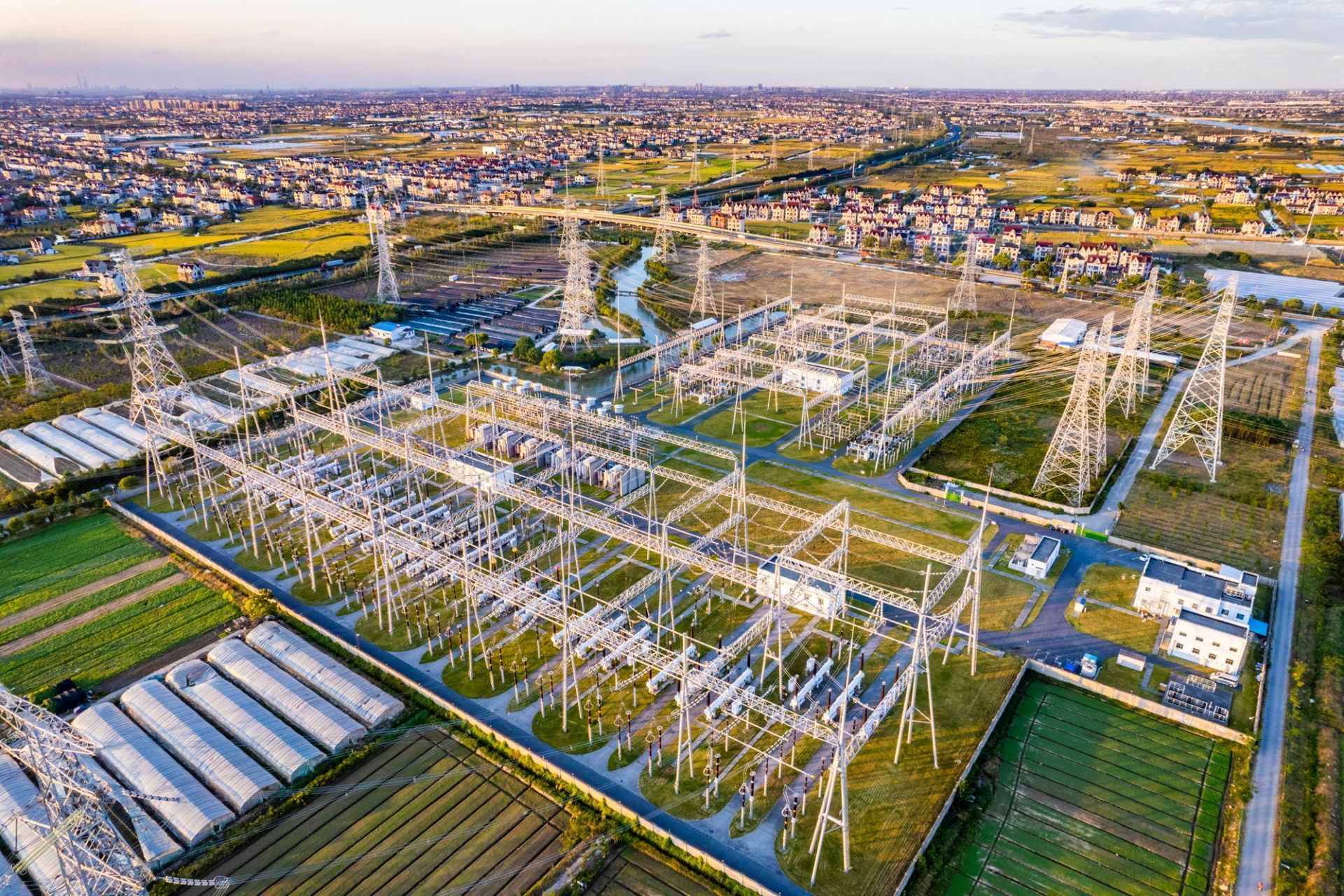
The next attack on Iran may not be answered only in the Middle East. A weakened regime with limited conventional options has reasons to look for ways to impose costs on the United States at home. And America’s electrical infrastructure presents an attractive target.
When Americans think about a military conflict with Iran, they tend to picture events unfolding thousands of miles away: missile exchanges, naval confrontations, airstrikes, and attacks on U.S. bases across the Middle East.
But there is another possibility worth taking seriously.
What happens if Iran decides that the best way to retaliate against the United States is not to attack another military installation overseas, but to create disruption here at home?
A sustained power outage would affect far more than the lights in our homes. Electricity supports water systems, communications, fuel distribution, transportation, hospitals, food storage, financial transactions, and countless other services. Disrupting it could impose costs on ordinary Americans and create pressure on the government without Iran having to win a conventional military confrontation.
That does not mean Iran can simply switch off the American grid. It does mean the possibility of cyberattacks against U.S. energy infrastructure deserves serious attention—particularly if the conflict escalates.
And this is not a threat invented by preparedness enthusiasts. American intelligence and law-enforcement officials have been warning about it for years.
A regime under pressure has reasons to retaliate asymmetrically
A government facing the possibility of losing its military capabilities, leadership, or even control of the country may calculate risk differently from a government enjoying a stable position.
Iran has spent decades building asymmetric capabilities. These include missiles, drones, regional proxy organizations, maritime disruption, and cyber operations. Those tools give Tehran ways to impose costs on stronger opponents without matching their conventional military power.
If additional U.S. strikes threaten the survival of the Iranian regime, retaliation could extend beyond the immediate battlefield.
The phrase “nothing to lose” is understandable, but it is not quite accurate. Iranian leaders still have plenty to lose: control of the country, the survival of the regime, economic assets, and the possibility of preserving some influence after the conflict. But a leadership that believes its survival is at stake may become more willing to accept risks that would otherwise be unacceptable.
Cyber operations are one way to retaliate while avoiding a direct military confrontation with the United States.
The warning about America's infrastructure has been public for years
In January 2024, FBI Director Christopher Wray delivered sworn testimony before the House Select Committee on the Chinese Communist Party.
He warned that Chinese government hackers were targeting American critical infrastructure, specifically naming water treatment plants, the electrical grid, oil and natural gas pipelines, and transportation systems.
Wray said Chinese hackers were positioning themselves inside American infrastructure networks in preparation to cause real-world harm. He described the activity as an effort to find and prepare to destroy or degrade the civilian infrastructure that keeps Americans safe and prosperous.
This was not a hypothetical warning about what a foreign adversary might someday attempt. The FBI and its partners had already identified and disrupted access associated with a Chinese state-sponsored campaign known as Volt Typhoon.
The significance is straightforward: a foreign government had demonstrated an interest in maintaining access to the systems Americans depend on, potentially for use during a future conflict. FBI Director Wray's January 31, 2024 testimony.
We have already demonstrated that cyberattacks can cause physical damage
There is another important piece of history that is often misunderstood.
In 2007, researchers at Idaho National Laboratory conducted what became known as the Aurora experiment. Under federal direction, they remotely manipulated the control systems of a diesel generator. The experiment caused the generator to operate in a destructive manner, physically damaging it.
The Government Accountability Office later documented the test. The generator required extensive repairs or a complete overhaul before it could operate again.
That was a real physical demonstration: cyber manipulation of industrial control systems caused physical damage to electrical equipment. GAO report GAO-15-749.
There is also research specifically involving transformers. A 2022 IEEE Access paper, Design and Emulation of Physics-Centric Cyberattacks on an Electrical Power Transformer, examined how cyberattacks could manipulate transformer operating conditions and produce damaging physical effects.
It is important to understand the distinction: the Aurora experiment physically damaged a generator.
The transformer research used computer-based emulation. It did not demonstrate the destruction of a full-scale American high-voltage transformer.
But together, these examples establish something important: cyberattacks against industrial control systems are not necessarily limited to stealing information or temporarily interrupting computer networks. Under the right conditions, they can have physical consequences.
Iran does not need to destroy the entire grid
The American electrical system is enormous, geographically distributed, and made up of interconnected regional networks. It is not one giant switch.
That complexity provides resilience, but it also creates a large attack surface. Utilities operate different equipment, software, networks, and security systems. Some industrial control equipment is older, and some systems have connections that create cybersecurity risks.
A successful attack against one utility would not automatically cause a nationwide blackout. Nor would damaging one transformer necessarily bring down an entire region.
But an adversary does not necessarily need to cause a nationwide blackout to achieve its objectives.
Disrupting selected utility operations, interfering with control systems, damaging equipment, or creating uncertainty about the reliability of electricity could have serious consequences. A regional outage lasting days is already a major emergency. A longer disruption involving multiple services would be considerably worse.
The Center for Strategic and International Studies has examined these risks in the context of the Iran conflict. Its April 2026 analysis noted that Iran does not have long-range weapons capable of physically damaging energy infrastructure inside the continental United States, but that cyber operations and other forms of disruption present a different set of concerns.
The same analysis described the presence of foreign adversaries, particularly China, inside U.S. critical infrastructure networks and the potential consequences of using that access during a conflict. CSIS: Iran Conflict Heightens Cyber Threats to U.S. Energy Infrastructure.
Iran has already shown an interest in American infrastructure
Iran's cyber capabilities should not be confused with China's. They are not identical, and there is no public evidence that the two countries are jointly planning an attack on the American electrical grid.
But Iran has its own history of targeting U.S. infrastructure.
In 2023 and 2024, Iran-linked actors targeted internet-connected industrial control systems. More recently, U.S. agencies issued warnings about Iranian-affiliated cyber actors exploiting programmable logic controllers—industrial computers used to monitor and control equipment—in American critical infrastructure.
In July 2026, CISA, the FBI, the EPA, and other federal partners updated their advisory on Iranian-affiliated actors targeting these systems. The advisory described unauthorized access and disruption affecting organizations across multiple critical infrastructure sectors.
That matters because programmable logic controllers are not ordinary office computers. They can be involved in the operation of pumps, motors, valves, and other industrial equipment.
The attacks do not establish that Iran can destroy the American grid. They do demonstrate that Iranian-linked actors are willing to target the kinds of systems that operate essential services.
Read the July 2026 federal advisory on Iranian-affiliated cyber activity.
Where China enters the picture
The possibility of Chinese assistance adds another dimension to this threat.
China and Iran have a strategic relationship, but it is important not to exaggerate it. Beijing has not given Tehran a formal defense guarantee, and China has substantial economic interests throughout the Middle East that it would not want to jeopardize.
Still, China has reasons to keep Iran economically and militarily viable.
The U.S.-China Economic and Security Review Commission reported in March 2026 that China purchased approximately 90 percent of Iran's exported oil. Those purchases generated an estimated $31.2 billion in Iranian oil revenue during 2025.
The Commission also documented Chinese networks helping Iran evade sanctions and obtain dual-use technologies relevant to missile and drone programs. Chinese components have been found in Iranian drones, and reports indicated that Chinese ports allowed Iranian vessels to load sodium perchlorate, a key ingredient in solid rocket fuel.
China has also given Iran access to its BeiDou satellite navigation system, although the extent of its military use remains unclear.
These are meaningful forms of support. They do not prove that China is directing Iranian military operations or providing Iran with access to American infrastructure. U.S.-China Economic and Security Review Commission: China-Iran Fact Sheet, March 2026.
Why would Beijing help Tehran?
One reason is strategic distraction. A prolonged conflict in the Middle East consumes American military resources, intelligence capacity, diplomatic attention, and political capital. Those are resources the United States might otherwise devote to the Indo-Pacific.
China may see value in helping Iran remain capable of imposing costs on the United States, while avoiding a direct confrontation with American forces itself.
That is a strategic calculation, not proof of a joint cyber operation.
There is also a distinction between what China has already done and what it might do. Chinese-linked activity inside U.S. critical infrastructure networks has been documented. Chinese economic and technology support for Iran has also been documented. Public evidence does not establish that Beijing has connected the two by providing Iran with access to American grid systems.
That distinction matters. We should take the documented threat seriously without inventing a connection that has not been proven.
The real concern is the combination of capabilities
Consider the separate pieces:
- Iran has a demonstrated willingness to use cyber operations against U.S. infrastructure.
- China has demonstrated the ability and intent to establish persistent access inside American critical infrastructure networks.
- The United States has publicly acknowledged that adversaries are positioning themselves for possible future disruption.
- Cyber manipulation of industrial control systems has been shown to cause physical damage to electrical equipment.
- A conflict that threatens the survival of Iran's leadership could increase Tehran's incentive to retaliate against the United States in ways that avoid direct military confrontation.
These facts do not prove that an Iranian attack on the American grid is imminent, or that China would participate in one.
But they do establish why the possibility should not be dismissed.
The March 2026 Annual Threat Assessment from the Office of the Director of National Intelligence warned that China, Russia, Iran, North Korea, and criminal cyber groups would continue seeking access to U.S. government, private-sector, and critical infrastructure networks. It specifically noted that these actors could pre-position or execute disruptive and destructive attacks.
The assessment also identified China as the most active and persistent cyber threat, while recognizing Iran as a continuing threat to U.S. networks and infrastructure.
The danger is not necessarily a single sophisticated operation that shuts down the country. It may be a combination of smaller attacks, disruptions, equipment failures, and uncertainty that makes an already difficult emergency harder to manage.
2026 Annual Threat Assessment of the U.S. Intelligence Community.
What does this mean for ordinary Americans?
A grid-down emergency does not begin when the lights go out. It begins when the systems we depend on stop working.
Water pumps need electricity. Fuel stations need electricity. Grocery stores depend on refrigeration, transportation, and electronic payment systems. Communications networks need power. Hospitals have backup systems, but those systems depend on fuel, maintenance, and resupply.
The longer an outage lasts, the more these dependencies matter.
And there is a difference between preparing for a short power failure and preparing for a prolonged disruption. A few flashlights and a couple of cases of bottled water are useful, but they are not a resilience plan.
Households should consider:
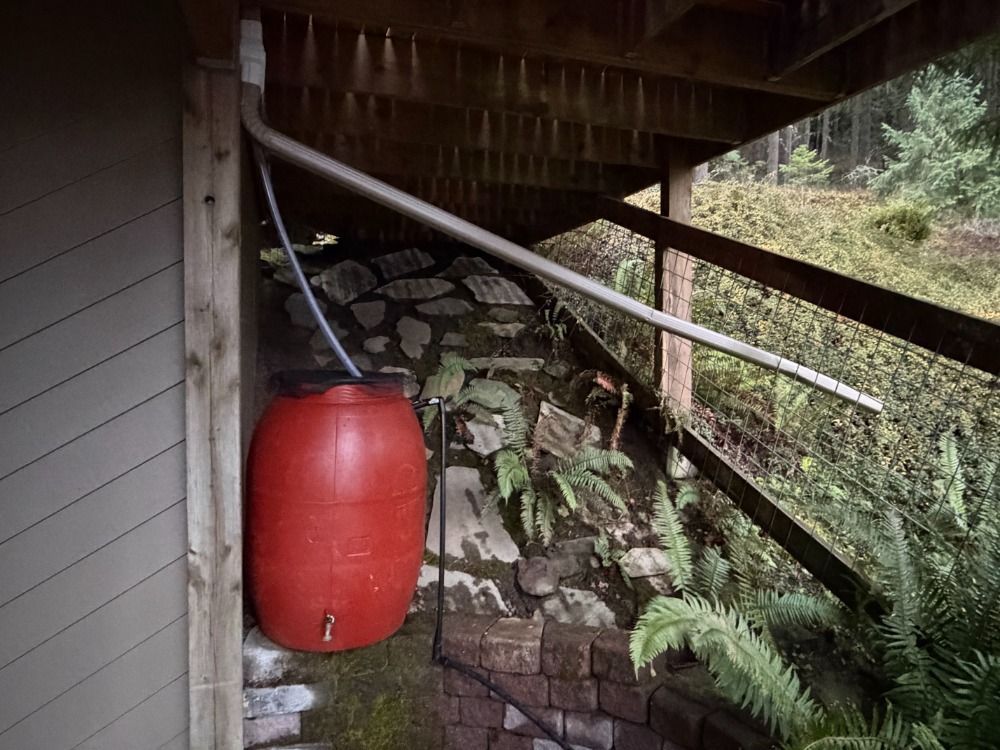
Water: Have a dependable supply and a way to treat additional water. If your home relies on a well, remember that the pump may not operate when the grid is down.
Food: Store food your household actually eats and knows how to prepare. Include foods that require little water and minimal cooking fuel.
Cooking: Have a safe backup cooking method and enough fuel to use it. Bulk cooking can conserve fuel when electricity or propane supplies are limited.
Power: Understand your essential electrical loads. A generator does not necessarily need to run the entire house. It may be more practical to recharge a battery system and use stored electricity for critical loads.
Communications: Have a way to receive information when cellular networks or internet service are unavailable.
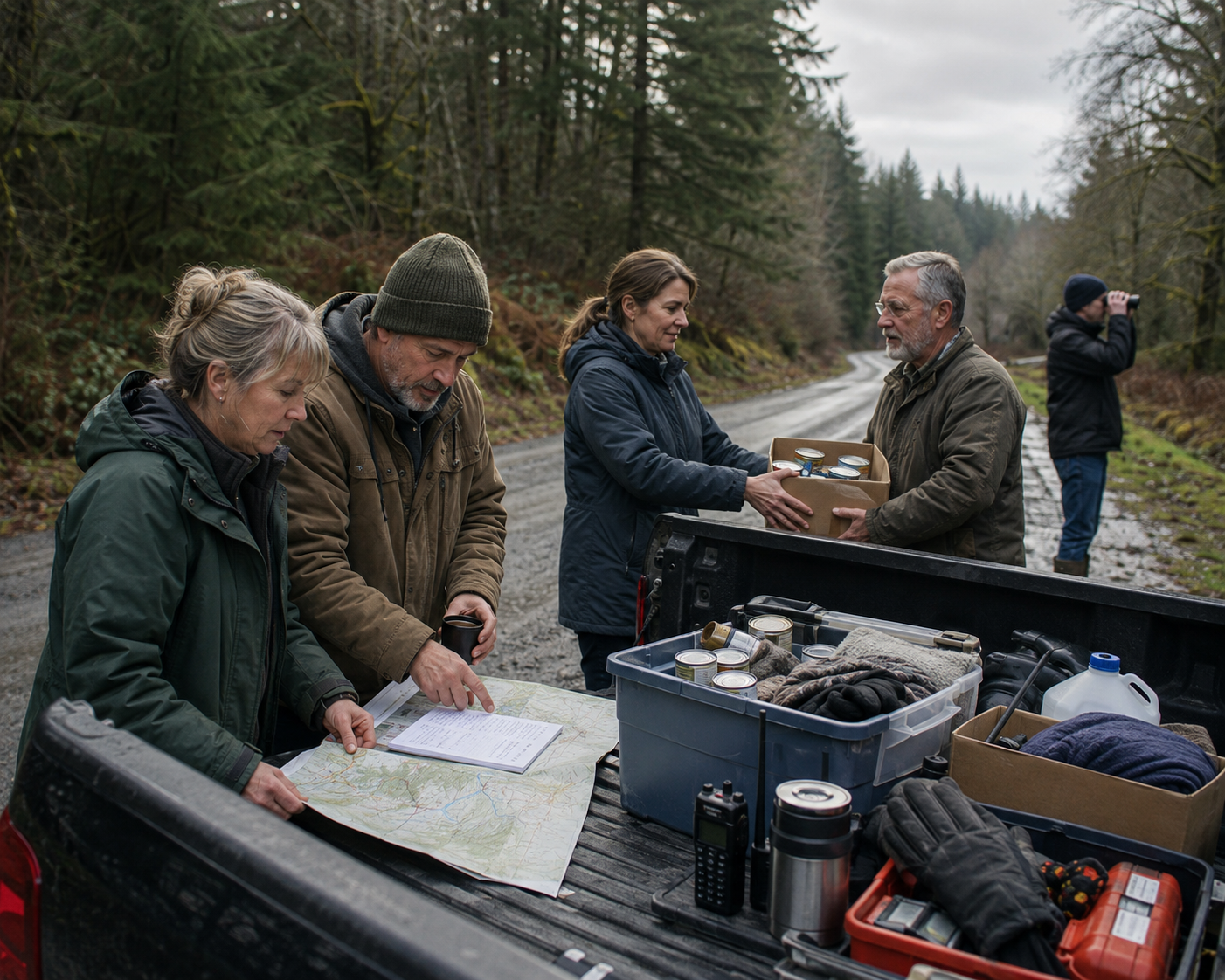
Neighbors: Know who lives around you. Identify useful skills, equipment, medical experience, and vulnerabilities. A neighborhood that can organize around water, food, security, communications, and mutual assistance is better positioned than a collection of isolated households.
These are not measures that require predicting a war. They are practical investments in resilience against storms, earthquakes, wildfires, infrastructure failures, and other disruptions.
The question is not whether we can predict the next attack
We cannot know whether Iran will retaliate against American infrastructure following another round of U.S. strikes. We cannot know whether China would provide assistance, whether an attack would succeed, or how extensive the resulting disruption might be.
But we do know that the threat is not imaginary.
The United States has documented foreign adversaries inside critical infrastructure networks. Federal agencies have warned about Iranian-affiliated actors targeting industrial control systems. Researchers have demonstrated that cyber manipulation can physically damage electrical equipment. And American intelligence officials have warned that adversaries are positioning themselves for the possibility of future disruption.
A government that believes its survival is threatened may look for ways to make its opponent pay. It does not have to defeat the United States militarily to create serious problems for American communities.
That is why the electrical grid deserves more attention than it usually receives in discussions of national security.
We should expect utilities and government agencies to strengthen defenses, share threat information, and prepare for attacks. But households and neighborhoods should not assume that the systems they depend on will always be available.
The point is not to panic. It is to recognize the dependencies we take for granted and reduce them where we can.
Gear matters. Judgment matters more. Community matters most.
Preparedness is only the beginning. The Ridge Plan explores what happens when stored supplies are no longer enough—and ordinary neighbors must turn preparation into decisions, trust, and survival.