When to Leave, and What to Take
What Jason Should Have Done
Companion article for The Ridge Universe · www.griddownfiction.com
This article is about one emergency: the winter grid failure that pushes the Keller family out of Port Angeles in Twenty-Eight Days West. It is not a general bug-out guide.
Jason Keller is not a model. He is a boilermaker in a 1940s house near the harbor, married to Rachel, a physics teacher, with a seventeen-year-old daughter, Mary. He has no bunker and no years of stored food. He stays too long, packs too late, and leaves on the night of the seventeenth day with a plan he should have finished in December. The tips below are the things he should have done and did not. Rachel and Mary carry parts of this. The missed decisions are still his.
What he was actually facing
The power goes out on New Year’s Day and does not come back. Phones die with it. The furnace, the refrigerator, and the ordinary noise of the harbor stop. It is January on the Strait of Juan de Fuca. The house gets cold.
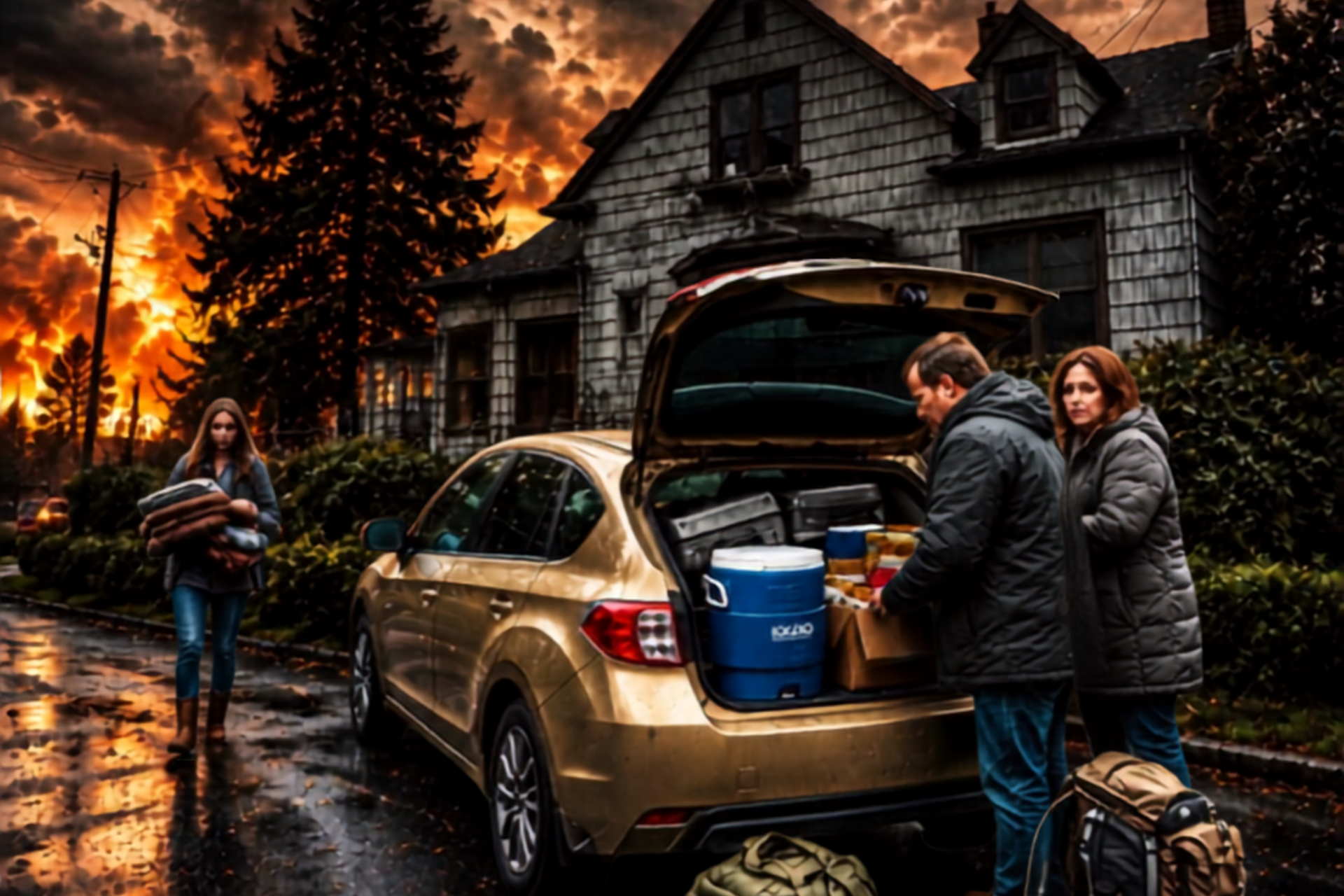
For a day or two it looks like a bad outage. Then the city water stops. Mary tries both bathroom taps and gets nothing. The water they stored in the bathtub on the first morning is what they have left in the house. At the Safeway, men with rifles are taking names. Rachel looks at the pantry and figures ten days of food if they are careful, or two weeks if they stretch the rice. Their generator is already being counted in hours of fuel. By the second week, men in trucks are taking food out of houses. They come onto the Keller porch, hit Jason, and carry off what is sitting on the counter. They leave a little rice and one can of beans. They do not find the duffels. That night the family loads a Subaru and drives west, toward a ridge past Joyce where they hope to be taken in.
No sheriff’s route. No shelter at the fairgrounds. Jason has to decide for himself. He waits until the decision is made for him.
He should have written the leave rule before anyone came to the door
Staying through the first several days was reasonable. The house was warmer than the road, and the pantry was still a pantry. Jason should have used those days to finish a plan. He used them to wait.
He should have written one rule and put it where Rachel and Mary could see it: if the taps are dry and they cannot buy food without giving their names to armed men, they leave the next night. He did not write it. They stayed until after the beating.
He should have treated each of these as enough on its own. He waited until they piled up.
Mary telling them the taps were dry should have been enough. The bathtub water was a short supply, not a solution. Rachel had already said rain off the roof could go into buckets for flushing and washing, and that they should not drink it untreated. Jason should have set those buckets under the downspouts at the house on the first dry morning, and he should have kept drinking water in jugs he could load into the car. He did not treat the dry taps as a leave trigger.
Rachel’s pantry count should have been enough. Ten days, two weeks if they starved the portions, and she did not want to go back to that Safeway. Jason should have taken that as the end of resupply in town. Small stores west of town might still take cash, or the gold necklace and earrings Rachel was willing to trade. That was a hope for the road, not a reason to stay. He stayed.
The men on the porch should not have been the first signal. By the time they punched him and boxed up the cans, the leave rule had already been missed. Hiding the duffels so the search missed them was a good move. It was not a plan. After they drove away, every extra hour in the house was a bet they would not come back and look in the garage. Jason should have left that night because the rule said so, not because he had just been hit.
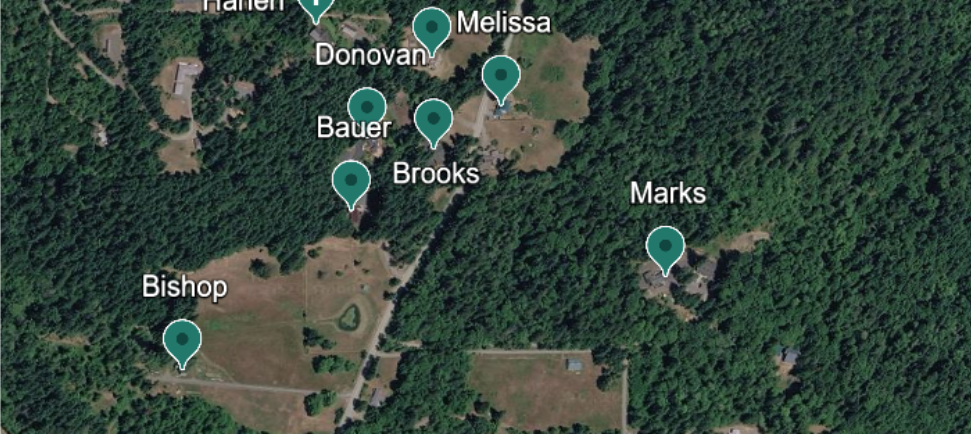
He also should have named the place before he needed it. “West” is a direction. The ridge works in the story because there are people on it. Jason should have had a person who had already said yes, and he should have told Rachel and Mary the name of the road in daylight. He should not have been building that half of the plan after the trucks.
He should have mapped the drive before New Year’s
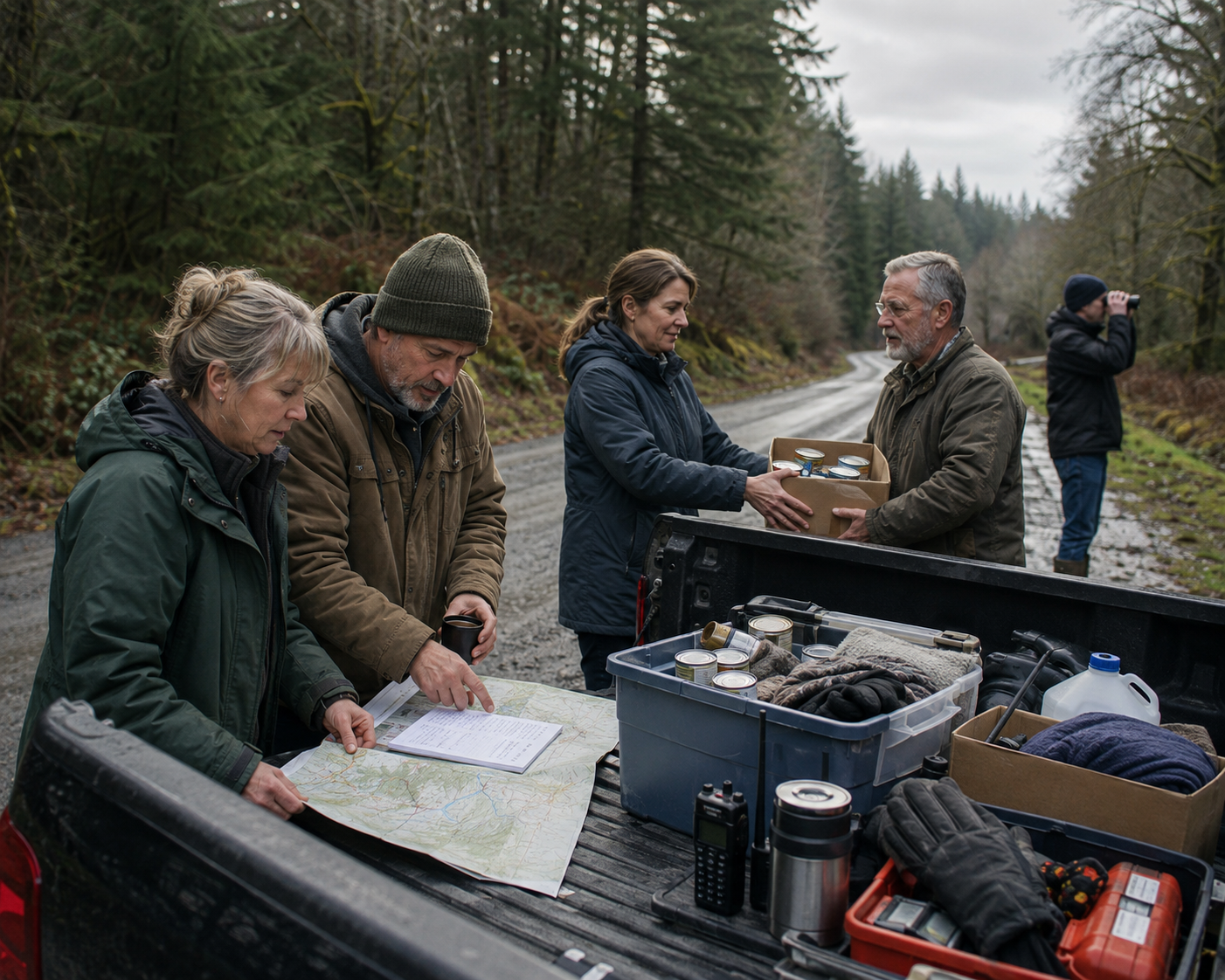
On the day they leave, Rachel spreads a paper map on the kitchen table under a lantern and marks side streets that keep them off Highway 101. Jason should have done that drive himself, once, while the power was still on. He should have marked two ways to the ridge, and the places 101 would jam or turn into a line of trucks. He did the map work on the way out the door.
Highway 101 was the obvious road west. That is why he was right to stay off it, and late to have an alternate. A few miles out of the neighborhood he sees vehicles and fires, kills the lights, and says checkpoint. Rachel says they will not get far on foot in that weather. Jason should have already known the next road, so that moment was a turn, not a trap. He had not driven it.
He should have filled the Subaru on day one. On the night they leave, the gauge is just under three-quarters. That got them out of town. Later he checks it more often than he admits, and the last miles run close to empty. Half a tank as a habit, and a full tank on the first day the outage looked wrong, was available to him. He did not take it.
He should have sent one message on day one or day two, while a phone might still work: they might be coming, and this is the road. By the night they leave, the outside voice is a radio crackle that does not belong to any neighbor. He had no confirmed welcome waiting.
He should have packed the car while the street was still quiet
Jason does pack before they go. Two duffels. Three cold-weather sleeping bags. Water containers. What food was left. Mary’s allergy medicine in a small bag. Mary’s backpack, which she does not set down. He checks the tires, the fluids, and the fuel. They go out in full dark, headlights off until the neighborhood is behind them, and they do not lock a house that has nothing left worth guarding. Those are the parts he got right. He got them right on day seventeen.
He should have staged the same load on day three, when the taps failed, and kept it out of the kitchen. The men took what they could see on the counter. They missed the bags because the bags were already hidden. Jason should not have needed a search to teach him that. The travel food should have been its own sack, already in the car, not mixed with what they were eating at the stove. On the road they measure cups of water and eat from a reserve. Mary breaks a granola bar in half for tomorrow. That only works if Jason had packed the reserve early and left it alone. He had not separated it soon enough.
He should have split the load into three piles, and he should have done it before anyone was hurt.
A pouch Rachel could keep in her lap: cash in small bills, ID copies, insurance, medicine bottles, a written list of doses and allergies, the gold she was willing to trade. She does end up with a waterproof pouch. It should have been packed on day one.
One backpack each, worn, not buried under sleeping bags. A few liters of water, a filter, purification tablets, one day of food that does not need a stove, a rain layer, hat, gloves, spare socks, a headlamp. Mary already treats her pack this way. Jason should have made that the rule for all three of them, so a dead Subaru west of Joyce did not strand them with the real supplies in the cargo area.
The rest in the car, and only the rest. Larger water jugs. The rest of the no-cook food. The three sleeping bags, which are what keep them from freezing in the car and in a barn. A tarp and cord. A metal cup they can boil in. The paper map. A radio. Tools, work gloves, and what he needed for a flat tire.
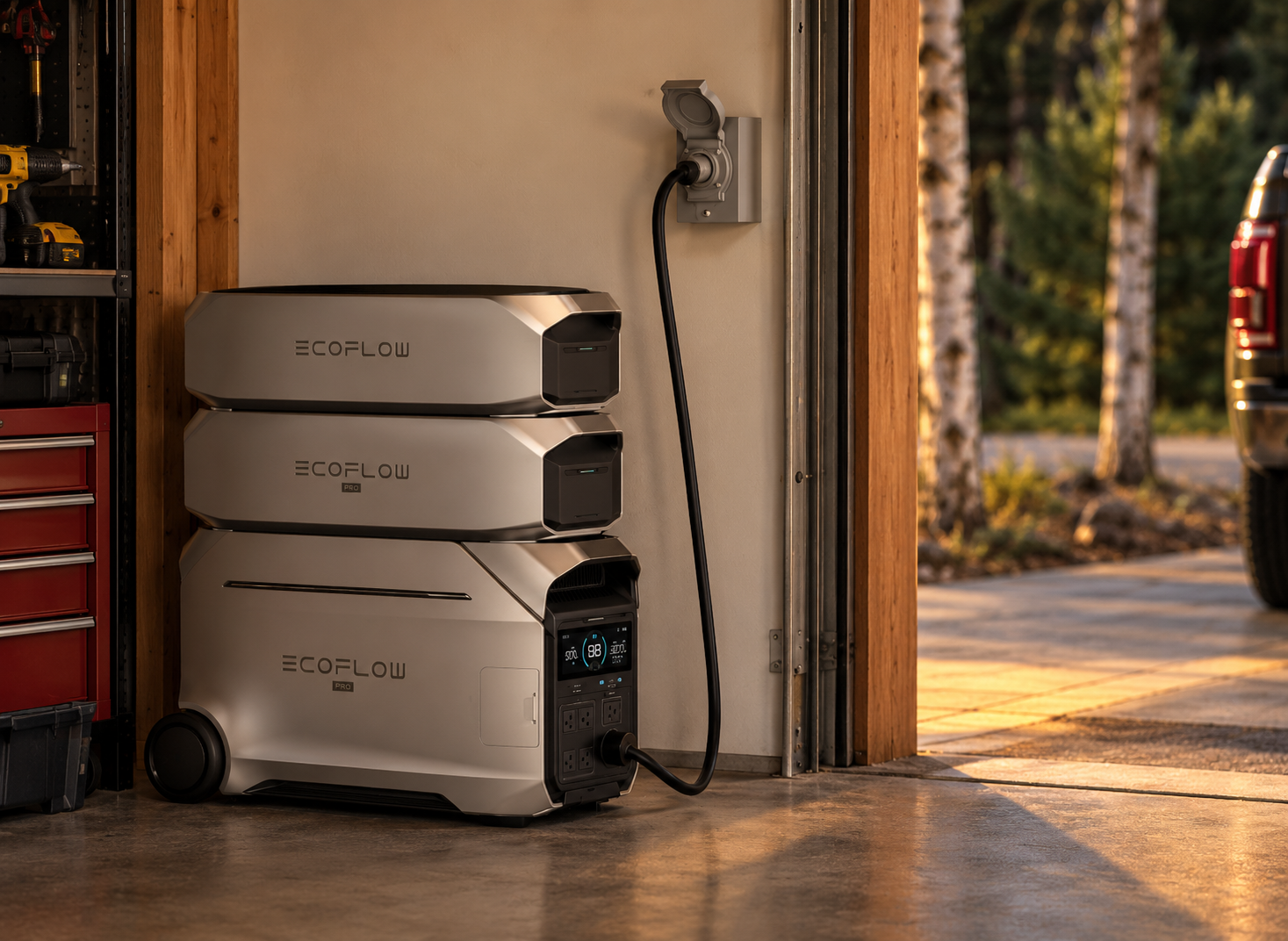
Ready.gov’s gallon per person per day is the right amount to store in a house. Jason should not have tried to treat it as a backpack number. A gallon weighs a little over eight pounds. Jugs in the car, a few liters on each back, and a filter so they could refill: that is the split he never made.
Rice could stay in the kitchen. It needs water and heat. He should have packed bars, peanut butter, nuts, tortillas, and a few cans with a manual opener. About two thousand calories a person a day for three days in the packs, and more in the car if it fit. He packed what was left, when it was almost too late to choose.
The sleeping bags were the right call, and they should have lived by the back door from the first cold night. Wool or synthetic layers, not cotton. A spare pair of socks each. The car is bitterly cold in the book. The windows sweat. Jason already owned the fix. He did not stage it.
The generator should have stayed a short tool, then gone silent. He should not have been counting fuel in hours beside the stove while the bags were still unpacked, and he should not have planned to take it west. A running generator tells the street you have fuel. He never had the fuel to make it a plan.
He should have left the extra weight. A month of cans, tools he did not need, anything that would not fit the line Rachel says at the car: everything they can carry. He was deciding that in the dark. He should have decided it in the garage, a week earlier.
He should have left the night the rule tripped, not the night after the trucks
The departure itself is mostly sound. Lights out. Listen at the back door. Alley. Headlights off on their own streets. Side roads. Keep moving.
Jason should have run that departure when Mary reported the dry taps, or when Rachel refused the Safeway. Not after a man had already put him on the kitchen floor. The hidden bags got them through one search. They did not make the house safe for another night.
If he was stopped, he was not going to talk his way into a fair trade. The men in his kitchen were taking. He should have kept the interesting supplies out of sight and the visible pile small and boring. Better than that, he should have been on a road they did not own, because he had marked it before they learned his name.
What he was never going to do, and should not have pretended to
He was not going to hike the Olympics in January. The fire roads are a way around people. Jason should have aimed the car at a house that had already agreed to open the door. Sleeping in the bags in a barn is what happened because the drive ran long. It should not have been the plan.
He was not going to solve this with a larger kit or a weapon. Cold, empty pipes, a short pantry, and frightened men did the damage. The miss was time. The bags he eventually packed would have been enough if he had packed them when the taps failed and left the next night.
One afternoon in December was the whole difference. Write the rule. Name the house past Joyce. Drive the side road once. Pack the pouch, the three backpacks, and the car pile. Fill the tank. Put buckets under the downspouts. Jason did the recognizable version of that list on day seventeen, with a swollen eye, after the food on the counter was already gone.
If you do not have a homestead
Most people in a grid-down are in Jason’s position, not on a ridge with a woodlot and a well. An apartment, a rental, or a small house in town does not become a farm in the first week. City water, the grocery store, the pharmacy, and the furnace are the systems you actually live on. When those stop, the house is a place to wait out the first days. It is not a place to spend the winter unless you already had water and food stored there.
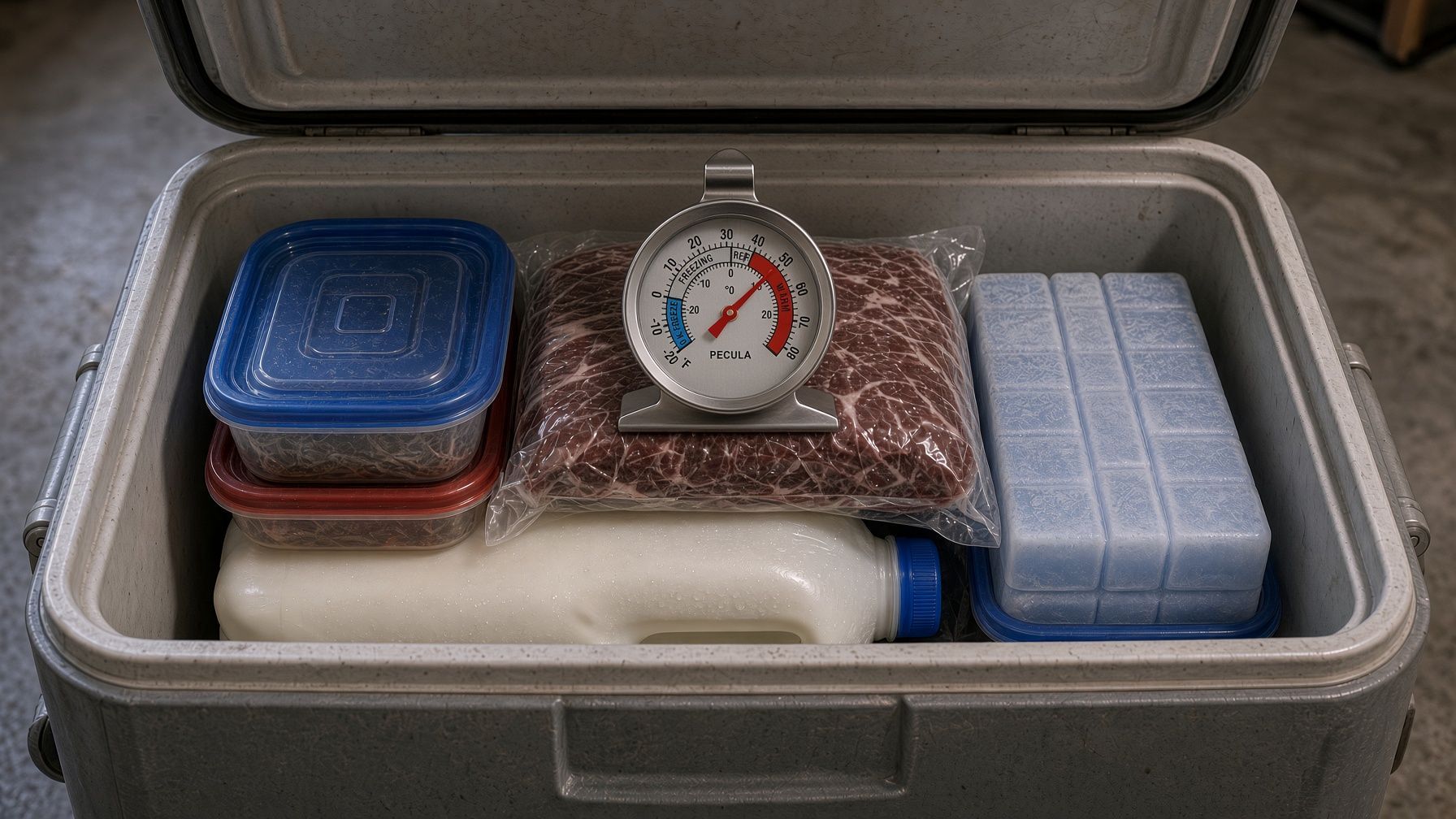
Prepare for four losses, in this order. Drinking water, because the taps can fail while the pantry still looks fine. Food you can eat with no stove, because rice and frozen meat do not help once the water and the power are gone. A way to stay warm in the clothes you can wear, because the furnace is done. A named place to drive to, with a person who has already said yes, because “get out of town” is not a destination.
You do not need a year’s supply to be ready to leave. You need about two weeks of water and food so you can stay while the roads are worst, and a car load so you can go when staying turns into a bet. That is jugs you can lift, a filter and tablets, no-cook food in its own sack, medicines in their bottles, document copies, warm layers, sleeping bags, a paper map, and a tank you do not let fall below half. Keep that load packed or easy to pack. Do not leave it on the counter.
Leave when any one of these is true. The water you can drink will not last. You cannot resupply without walking into a crowd or handing your name to someone armed. People are taking from houses on your block. You still have a route to the place that agreed to take you, and that route is still open. Go the next night, on a side road you have already driven, with the lights off until you are out of your own streets. Do not wait for a perfect sign. Jason’s perfect sign was a man in his kitchen.
Preparedness is only the beginning. The Ridge Plan explores what happens when stored supplies are no longer enough—and ordinary neighbors must turn preparation into decisions, trust, and survival.