A License Is Not a Meat Plan

When hunting or trapping is a real food path --- and when it is just gear in a closet. Education, access, ethics, and a one-week test that does not start with a trigger.


R.T. Fagan
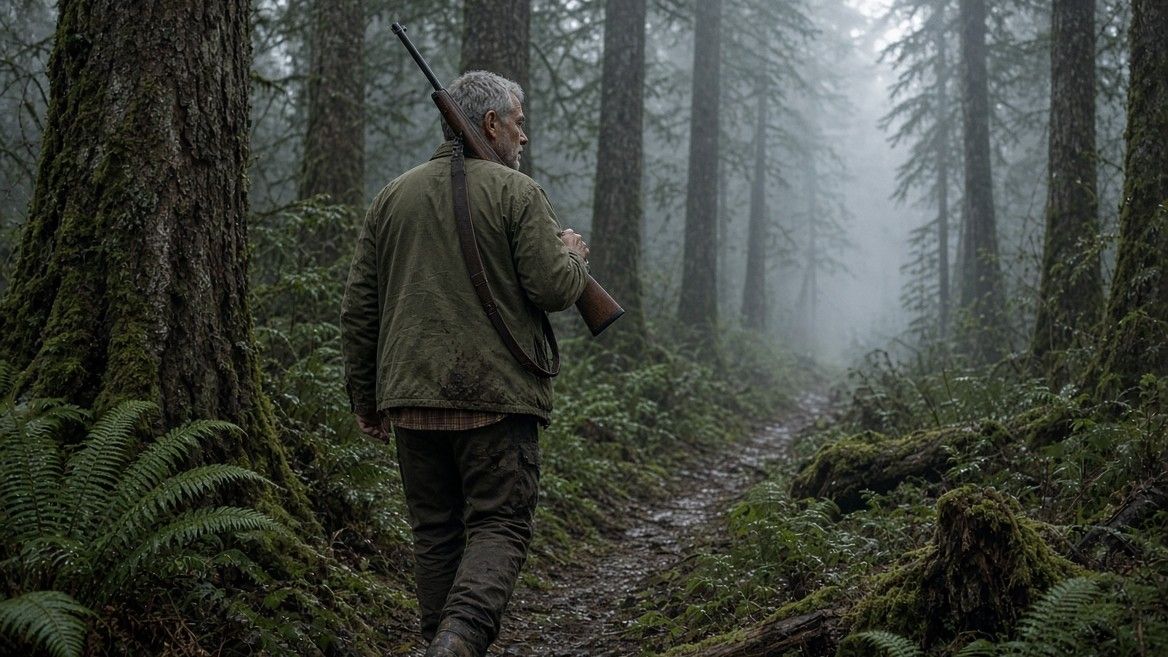
A License Is Not a Meat Plan

A freezer you have not filled legally is a story.


That is the tension most preparedness writing skips. Hunting gets treated as the adult version of food production, the thing that separates serious people from gardeners. Then the season opens and the serious person has no hunter education card, no written permission, no idea what the unit is doing this year, and no household that will cut up what comes home. Under pressure, that gap does not become competence. It becomes a bad decision in a place with rules.


This article has one job: help you decide whether hunting or trapping belongs on your household path at all, and what to do this year if it does. It will not teach you how to take an animal. It will not describe traps, sets, or workarounds. If that is what you came for, you are in the wrong place. Legal preparedness starts with paper, land, and ethics. Methods belong in a classroom your state already runs.


Bottom line up front

Hunting is a licensed, seasonal, access-bound skill. Trapping is usually a separate license and a tighter rulebook. Neither is a night-one plan. Neither is an urban first path.


If you already hold the right credentials, already have a place you may hunt or trap, and already eat wild meat, this path can add real food in season. If you do not, your first work is hunter education and the regulation booklet --- not a shopping list.


If you only do one thing this week: look up your state wildlife agency's hunter education requirement and whether trapping is a separate credential where you live. Enroll, or write "not this year" on the page and put your calorie effort into a garden or a legal fish.


What this path can pay --- and what it costs

A successful small-game season can put meals on a table. A deer can fill a freezer in a way a patio garden cannot. That sentence is true and incomplete.


Costs that do not show up in the highlight film:


  • Time in education, scouting, and season dates the calendar does not
  • move.
  • Money in licenses, tags, equipment you already own or will have to
  • maintain, fuel, and processing.
  • Access that can vanish when a landowner changes their mind or a unit
  • closes.
  • Skill that includes not just the shot but the work after: recovery,
  • cooling the meat, legal tagging, butchering or a processor who still has power and a slot.
  • A household that will eat the food. If they will not, you have a trophy problem, not a calorie path.


Wanton-waste rules exist because wasting an animal you were allowed to take is both unethical and, for many species, illegal. Fair chase is not poetry. It is the line your state and the people who share the land still expect you to hold when nobody is filming.


Trapping belongs in the same adult frame and then some. Many states license it separately. Many cities effectively ban it. Some methods are restricted or prohibited depending on species and location. If you cannot find the current regulation in your own state's book, you do not have a trapping path. You have a rumor.


The legal layer is the path

Hunter education is required in all fifty states, with details that change by birth year, age, and whether a field day is part of the certificate. Reciprocity exists in many places and is not something to assume from a forum post. Carry the card. Buy the correct license. Buy the species tag or stamp the season requires. Migratory birds add federal rules on top of state ones, including registration systems your agency will name for you.


Read this year's booklet. Seasons move. Bag limits move. Legal shooting hours move. Equipment rules move. What your uncle did in 1998 is not a source.


Land is the other statute. Public land has unit maps, weapon restrictions, and parking rules. Private land needs permission that is current and specific. A nod at a gas station is not a document you want to rely on when someone asks why you are in that field. Trespass ends the path. It also ends other people's access when landowners lock gates because of one household that could not wait.


This site will not walk you around those rules. If a plan only works by ignoring a license, a season, or a fence, it is not a preparedness plan.


Urban: almost never first, sometimes never

City households run into discharge ordinances, no hunting access, nowhere legal to handle an animal, and neighbors who will call the moment they see something they do not understand. For most apartments and tight suburbs, hunting is a skill you train elsewhere --- on permitted land, in season, after education --- or you do not train it.


That is not a moral ranking. It is a map. An urban reader who puts "small game" on a 72-hour list is writing fiction.


If you live in town and still want this path later, the honest sequence is: education now, a mentor or a club that hunts legally, a place you can reach without turning the commute into the hobby, and a processing plan that does not assume your kitchen is a barn. Until those exist, this article's job is to keep you from spending money on a story.


Rural: possible, still not automatic

A ridge household with timber and a family section can make hunting a real layer. Possible is not the same as this month.


You still need the card and the license. You still need to know the unit. Family land is not permission unless the person who can grant it has granted it. Neighbors talk. A first season is often a lot of walking and a small pile of meat. Budget stored food as if the season can go to zero. Plenty of serious hunters buy beef in a bad year. That is not failure. That is the constraint.


Trapping on rural ground is the same paper-and-ethics test with more neighborhood visibility. Dogs, kids, and posted ground make sloppy work a problem that will not stay on your property. If you pursue it, you pursue it as a regulated activity with current rules in hand --- through the channels your state already uses --- not as a sideline you improvise from memory.


Ethics that survive contact with hunger

Ethics get cheap in essays and expensive in a field at last light.


Shot selection and recovery are part of the food path. An animal you cannot find is not food. It is a waste you own. If conditions are wrong --- light, angle, a doubtful hit --- the adult choice is to wait. Hunger will argue. The regulation book and the animal do not care about the argument.


Respect for landowners is part of the food path. Gates the way you found them. No ruts you would not want in your own pasture. A short thanks after the season, even when the bag was empty.


Respect for the people who do not hunt is part of it too. You do not display the work from the driveway as a lecture. You handle meat out of the neighbor's sight line when you can. You keep weapons legal in transport and storage. Security is a pillar on this site. Recklessness is not.


If you cannot hold those lines when you are tired, hunting is not your first calorie path. It will not become easier when the store is closed.


Meat in the kitchen is the rest of the skill

Taking an animal, legally, is half the job. Cooling it promptly, keeping dirt and gut contents out of the meat, and cutting it into meals the household will cook is the other half. Specifics belong in a field course and a butcher block you practice on with store meat first.


If your only preservation plan is "the freezer," you have a grid-tied hunting path. Know what you will do with meat if the power is out for a week: cook and share in the safe window, can with a process written for meat, dry only if you already know the method well enough to stake a stomach on it. Do not invent a preservation trick from a comment thread the night you need it.


Practice the kitchen side before the season. Cut a cheap roast. Render and store fat if that is part of how you cook. Make one meal from a cut you usually avoid. A household that only eats backstraps will waste a deer.


Mistakes and tradeoffs

The first mistake is buying the identity. Camo and a safe full of options do not put a rabbit in a pot. Education and access do.


The second is treating hunting as a substitute for stored food and a garden. Seasons close. Animals move. You get sick opening weekend. The pantry still has to work.


The third is dragging trapping into a city or a suburban greenbelt because a video made it look tidy. That is how people collect charges and poison the well for everyone who hunts straight.


Tradeoffs: hunting can move more calories in a week than a bed of greens will move in a summer. It also concentrates risk --- legal, physical, and social --- in a way a potato patch does not. Trapping can be efficient in the right legal setting and a disaster in the wrong one. Neither path is "more serious" than a garden. Serious is the one you can finish inside the law.


Do not do this: skip hunter education because you are an adult. Do not do this: hunt a neighbor's ground on an old conversation. Do not do this: ask an article on the internet to replace the regulation booklet on your agency's site.


What to do this week


Open your state wildlife agency site. Not a retailer. Not a personality.


Preparedness is only the beginning. The Ridge Plan explores what happens when stored supplies are no longer enough—and ordinary neighbors must turn preparation into decisions, trust, and survival.

Mountain House Beef Potato Hash
By R.T. Fagan September 6, 2026
Serves 2 · ≈1,000 cal each Ingredients 2 servings Mountain House diced beef, rehydrated 3 cups rehydrated Augason Farms potato shreds or slices 4 Tbsp vegetable oil or olive oil ½ cup rehydrated Augason Farms spinach flakes ½ cup rehydrated diced carrots 5 garlic cloves, minced Smoked paprika, cumin, salt, black pepper Method Heat oil in a cast-iron skillet over the coals. Add potatoes in a single layer. Let them crisp before stirring. Add garlic, beef, carrots, and spices. Cook 5–6 minutes. Fold in spinach at the end so it wilts into the hash. Nutrition (full meal / per person) Calories: ≈2,010 / 1,005 Protein: ≈66 g / 33 g Carbs: ≈160 g / 80 g Fiber: ≈14 g / 7 g Significant vitamins/minerals: Protein, iron and zinc (beef), potassium (potatoes), vitamin A and C (carrots/spinach), calorie-dense oil More recipes and additional bonus material can be found at https://www.griddownfiction.com/bonus-material
Fire-Pot Ramen with Chicken, Egg & Broccoli
By R.T. Fagan September 5, 2026
Serves 2 · ≈1,000 cal each Ingredients 6 bricks Top Ramen (seasoning packets optional / use sparingly) 2 cans canned chicken, drained 2 servings powdered eggs, rehydrated and scrambled 4 Tbsp vegetable oil 1 cup rehydrated Augason Farms broccoli florets 4 garlic cloves, minced Broth if available, chili flakes, black pepper, optional soy sauce Method Cook ramen in a pot over the fire until just tender. Drain most of the water, leave a little. In a skillet, heat oil. Sauté garlic, then scramble the powdered eggs and set aside. Add chicken and broccoli to the oil. Heat through. Combine noodles, eggs, chicken, and broccoli. Toss with remaining oil. Season. Nutrition (full meal / per person) Calories: ≈2,030 / 1,015 Protein: ≈68 g / 34 g Carbs: ≈195 g / 98 g Fiber: ≈10 g / 5 g Significant vitamins/minerals: Protein from chicken and eggs, vitamin C and K (broccoli), B-vitamins (noodles), fats from oil for calorie density More recipes and additional bonus material can be found at Https://www.griddownfiction.com/bonus-material
Creamed Corn Chicken & Rice Skillet
By R.T. Fagan September 4, 2026
Serves 2 · ≈1,000 cal each Ingredients 2 cans canned chicken, drained 3 cups cooked brown or white rice 1 can cream corn 4 Tbsp extra-virgin olive oil or vegetable oil ½ cup rehydrated Augason Farms broccoli florets 4 garlic cloves, minced Salt, black pepper, paprika, dried thyme Method Heat oil in a large skillet over the fire. Sauté garlic 30 seconds. Add chicken and broccoli. Cook 2 minutes. Stir in cream corn and rice. Simmer until thick, creamy, and hot. Adjust seasoning. Nutrition (full meal / per person) Calories: ≈2,000 / 1,000 Protein: ≈70 g / 35 g Carbs: ≈180 g / 90 g Fiber: ≈12 g / 6 g Significant vitamins/minerals: High protein and niacin (chicken), vitamin C (broccoli), B-vitamins (rice), vitamin A (corn), calorie-dense oil 
Black Bean Burger Skillet with Corn & Potatoes
By R.T. Fagan September 3, 2026
Serves 2 · ≈1,000 cal each Ingredients 2 servings Augason Farms black bean burger (prepared per package) 2 cups cooked or rehydrated Augason Farms potato slices or shreds 1 cup kernel corn or cream corn 4 Tbsp extra-virgin olive oil or vegetable oil ¼ cup Augason Farms cheese blend powder ½ cup rehydrated spinach flakes (optional) 4 garlic cloves, cumin, smoked paprika, chili powder, salt Method Heat oil in a cast-iron skillet over medium coals. Brown the black bean burger mix, breaking it into crumbles. Add garlic, spices, potatoes, and corn. Cook 6–8 minutes, stirring so the potatoes crisp on the edges. Sprinkle cheese powder and fold in spinach. Heat until the cheese melts into the skillet. Nutrition (full meal / per person) Calories: ≈2,000 / 1,000 Protein: ≈58 g / 29 g Carbs: ≈200 g / 100 g Fiber: ≈28 g / 14 g Significant vitamins/minerals: High fiber and folate (black beans), potassium (potatoes), vitamin A (corn/spinach), calcium (cheese powder), healthy fats from oil More recipes and additional bonus material can be found at https://www.griddownfiction.com/bonus-material
Baked Bean, Green Bean & Chicken Garlic Skillet
By R.T. Fagan September 1, 2026
Serves 2 · ≈1,000 cal each Ingredients 2 cans baked beans 1–2 cans canned chicken, drained 1 can cut green beans, drained 4 Tbsp extra-virgin olive oil 5 garlic cloves, minced 1 cup cooked rice (optional stretcher if you want extra bulk) Smoked paprika, black pepper, chili flakes, salt Method Heat olive oil in a deep skillet or Dutch oven over the fire. Sauté garlic 30 seconds. Add chicken and green beans. Heat 2 minutes. Stir in baked beans. Simmer until thick and bubbling. Fold in rice if using. Taste and add heat.  Nutrition (full meal / per person) Calories: ≈2,000 / 1,000 Protein: ≈72 g / 36 g Carbs: ≈175 g / 88 g Fiber: ≈24 g / 12 g Significant vitamins/minerals: High fiber (baked beans), protein (chicken + beans), vitamin K and C (green beans), lycopene if sauce is tomato-based, healthy fats from olive oil More recipes and additional bonus material can be found at https://www.griddownfiction.com/bonus-material
minced Clam Garlic Tomato Pasta
By R.T. Fagan September 1, 2026
Serves 2 · ≈1,000 cal each Ingredients 12 oz dry pasta 2 cans minced clams, drained (reserve a little liquid) 1½ cups tomato sauce or tomato chunks & garlic 5 Tbsp extra-virgin olive oil 1 cup rehydrated Augason Farms spinach flakes or broccoli 6 garlic cloves, minced Salt, black pepper, red pepper flakes, dried oregano Method Boil pasta in salted water over the fire. Drain, save ½ cup pasta water. In a skillet, heat olive oil. Sauté garlic 30 seconds. Add tomato sauce, clams, reserved clam liquid, and greens. Simmer 3–4 minutes. Toss in pasta and a splash of pasta water until glossy. Season well. Nutrition (full meal / per person) Calories: ≈2,010 / 1,005 Protein: ≈64 g / 32 g Carbs: ≈185 g / 92 g Fiber: ≈16 g / 8 g Significant vitamins/minerals: Iron, B12 and selenium (clams), lycopene and vitamin A (tomato), vitamin K/C (greens), monounsaturated fats and vitamin E (olive oil) More recipes and additional bonus material can be found at https://www.griddownfiction.com/bonus-material
Pulled Pork Pineapple Fried Rice
By R.T. Fagan September 1, 2026
Serves 2 · ≈1,000 cal each Ingredients 2 cans pulled pork, drained 4 cups cooked jasmine or long-grain rice (day-old best) 1 can pineapple chunks, drained (reserve 2 Tbsp juice) 5 Tbsp coconut oil or vegetable oil 1 cup rehydrated Augason Farms diced carrots or veg medley 6 garlic cloves, minced Salt, black pepper, chili flakes, optional soy sauce Method Heat 3 Tbsp oil in a wok or cast-iron skillet over the open fire. Add garlic and flash-fry 20 seconds. Add rice and break up clumps. Fry 3–4 minutes until it picks up color. Stir in pulled pork, pineapple, reserved juice, and vegetables. Add remaining oil. Cook until hot and slightly caramelized. Season hard. Nutrition (full meal / per person) Calories: ≈2,020 / 1,010 Protein: ≈62 g / 31 g Carbs: ≈190 g / 95 g Fiber: ≈12 g / 6 g Significant vitamins/minerals: Vitamin C (pineapple/carrots), B-vitamins and iron (pork + rice), vitamin A (carrots), calorie-dense fats from oil More recipes and additional bonus material can be found at https://www.griddownfiction.com/bonus-material
Black cast-iron pot of bubbling stew over an open flame with a golden crust on top
By R.T. Fagan August 21, 2026
Serves 2 · ≈1,000 cal each Ingredients 2 cans chili con carne with beans 1 box or package corn bread mix (prepared with water + 2 Tbsp vegetable or olive oil) 3 Tbsp extra-virgin olive oil 1 cup rehydrated kernel corn 4 garlic cloves, extra chili powder, cumin, salt Method Heat olive oil in a Dutch oven or deep cast-iron skillet over the open fire. Sauté garlic. Add chili + corn; simmer 5 minutes. Prepare cornbread batter (add oil for richness). Pour batter over the chili. Cover tightly and cook over low coals or with coals on the lid until the cornbread is set and golden.  Nutrition (full meal / per person) Calories: ≈2,020 / 1,010 Protein: ≈55 g / 27 g Carbs: ≈230 g / 115 g Fiber: ≈25 g / 12 g Significant vitamins/minerals: High fiber & protein (chili/beans), vitamin A & lycopene, healthy fats (olive + vegetable oil), iron
A pot of bubbling fruit dessert cooking over an open campfire, with steam rising and flames below.
By R.T. Fagan August 21, 2026
Serves 2 · ≈1,000 cal each Ingredients 3 cups dry oatmeal 4 Tbsp peanut butter 3 Tbsp coconut oil ½ cup raisins + ½ cup rehydrated Augason Farms mixed fruit / blueberries / sliced apples 2 Tbsp honey or maple syrup Pinch salt, cinnamon, optional powdered milk for creaminess Method Cook oatmeal in water (or reconstituted milk) in a pot over the open fire until thick. Stir in coconut oil and peanut butter until melted and creamy. Fold in fruit and raisins. Sweeten and spice. Serve hot from the fire.  Nutrition (full meal / per person) Calories: ≈2,000 / 1,000 Protein: ≈50 g / 25 g Carbs: ≈220 g / 110 g Fiber: ≈28 g / 14 g Significant vitamins/minerals: High healthy fats & vitamin E (peanut butter + coconut), potassium & antioxidants (fruit/raisins), sustained energy from complex carbs + soluble fiber
Black cast-iron pot simmering over flames, filled with dark stew and chunks of vegetables.
By R.T. Fagan August 21, 2026
Serves 2 · ≈1,000 cal each Ingredients 1 cup dry Clear Creek red lentils 1 can (or 2 cups) black beans 1–2 servings Mountain House diced beef (rehydrated) 4 Tbsp coconut oil 1 cup rehydrated Augason Farms potato shreds or slices ½ cup rehydrated spinach or veg medley 5 garlic cloves, cumin, smoked paprika, bay leaf, salt, chili Method Simmer lentils in water/broth over the fire until soft (15–20 min). In the same pot melt coconut oil; add garlic + spices. Stir in beef, black beans, potatoes, and greens. Simmer 5 more minutes until thick and bubbling over the flames.  Nutrition (full meal / per person) Calories: ≈2,010 / 1,005 Protein: ≈78 g / 39 g Carbs: ≈175 g / 87 g Fiber: ≈35 g / 17 g Significant vitamins/minerals: Extremely high fiber & iron (lentils + beans), vitamin A & C (greens), MCTs (coconut oil), zinc & B-vitamins