When the Toilet Stops: Urban and Rural Sanitation After the Grid Goes Down
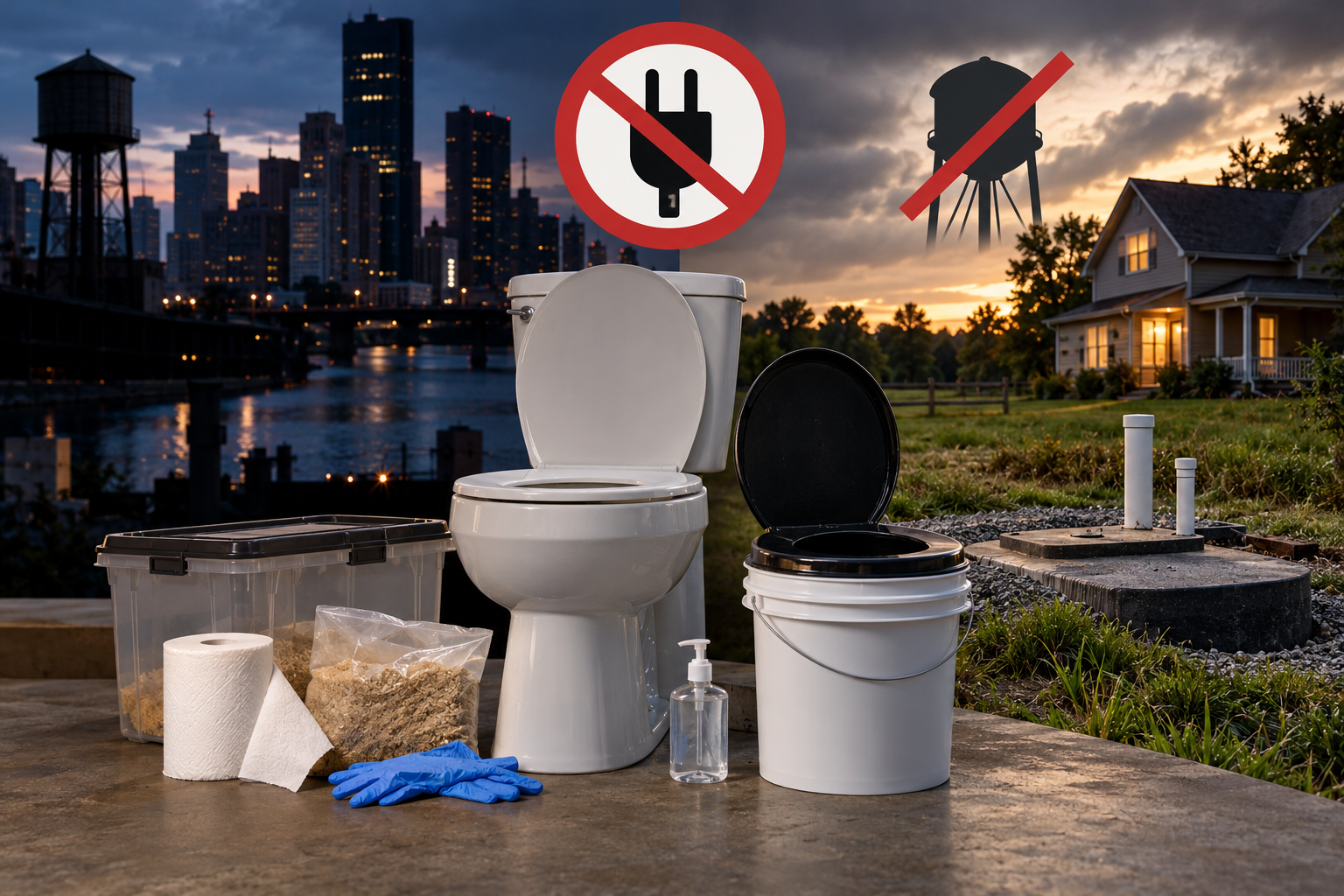
***NOTE: This article references King County Washington. Be sure to check with your county for specifics pertaining to your location.
A toilet that flushes during the first few hours of a blackout can create a dangerous illusion: that the sanitation system is still working.
It may be—for now.
Many drinking-water systems need electric pumps to treat water, fill storage tanks, and maintain pressure. Wastewater systems may use gravity for part of the trip, but lift stations, pumps, controls, and treatment plants still require power. Utilities often have generators and stored fuel, so service may continue during a short outage. A prolonged grid failure is different. When pumps stop, water pressure can fall, sewage can back up, and untreated waste can be released into the environment.
Rural households are not automatically protected. Some conventional septic systems are gravity-fed and can continue accepting wastewater without household electricity, although the tank and drainfield still have limited capacity. Other systems depend on grinder pumps, effluent pumps, lift pumps, timers, alarms, pressure distribution, aerators, or blowers. When those components lose power, wastewater may collect only until a pump chamber or reserve-storage space fills. A private well also needs electricity unless the property has a working backup method.
The solution is not complicated, but it needs to be prepared before the bathroom becomes unusable.
Do Not Wait for Sewage on the Floor.
Stop or sharply reduce water use when:
- Local officials say water or sewer service is impaired.
- Water pressure drops or a boil-water advisory is issued.
- Toilets or sinks begin draining slowly.
- Drains gurgle or sewage odors appear.
- A floor drain starts rising or backing up.
- A septic alarm activates.
- A powered septic pump, blower, or control panel loses electricity.
- The drainfield is flooded or the surrounding soil is saturated.
Do not keep flushing to see whether the problem clears. Every flush adds more wastewater to a system that may no longer be able to move or treat it.
If sewage begins backing up, stop using sinks, showers, washing machines, and toilets. Keep people and pets away from contaminated areas. Avoid direct contact and follow local public-health instructions for cleanup.
The Basic Household Solution: A Lined Emergency Toilet
For most households, the safest short-term answer is to contain waste where the normal toilet is located or in a sturdy five-gallon bucket.
You will need:
- A five-gallon bucket with a tight lid and, preferably, a snap-on toilet seat—or an existing toilet bowl.
- Two heavy-duty plastic garbage bags for each active setup.
- Absorbent material such as cat litter, sawdust, peat moss, or fireplace ash.
- Toilet paper.
- Waterproof disposable or reusable gloves.
- Soap, safe water, and paper towels for a nearby handwashing station.
- A rigid, lidded container for temporarily storing sealed waste bags.
Using an existing toilet
- Turn off the water valve behind the toilet.
- Flush once to empty most of the water from the tank and bowl.
- Place one heavy-duty bag inside a second bag.
- Fit both bags beneath the seat so the seat holds them in place.
- Put a layer of absorbent material in the inner bag.
- Add a small amount of absorbent material after solid-waste use to control moisture and odor.
- Replace the inner bag before it becomes heavy or difficult to handle. Tie it securely without squeezing out air toward your face.
- Place the sealed bag inside the designated rigid storage container and install a fresh inner bag.
Using a five-gallon bucket
Use the same double-bag method. Add a fitted lid or emergency toilet seat, and place the bucket on a stable, level surface. Keep it away from food preparation and eating areas. Close the lid between uses to limit odors, insects, and accidental contact.
Never allow a small child to use or approach a bucket toilet without adult supervision. An open bucket also presents a drowning hazard to toddlers.
Separate Liquids When an Outage May Last
Urine creates much of the volume, weight, and odor in a mixed-waste container. A two-container system can make a longer emergency easier to manage:
- Use one clearly marked bucket or container for urine only.
- Use a double-lined bucket for feces and toilet paper.
Separating the two keeps the solid-waste bags lighter and allows absorbent material to work better. Keep both containers covered, stable, and clearly labeled. Never pour urine or wastewater into a storm drain, street gutter, stream, lake, wetland, or near a drinking-water source. Follow local emergency instructions for disposal; rules can differ by location and event.
Urban and Apartment Sanitation
An urban household normally has little safe space for digging, burying waste, or storing it outdoors. A latrine is not an appropriate city solution. The practical urban plan is containment, protected storage, and official disposal.
1. Stop adding water to a questionable sewer
If officials report sewer trouble—or drains show signs of backup—stop flushing. Do not assume that having stored water means it is safe to pour that water into the toilet. The restriction may be on the sewer system, not the water supply.
In a multifamily building, plumbing from upper floors can affect lower units. Residents should report slow drains, odors, or backups immediately. Building management should communicate whether the building has sewage ejector pumps, sump systems, or other equipment that has stopped.
2. Create one controlled toilet area
Choose one bathroom if possible. Remove towels, rugs, toothbrushes, cosmetics, and other items that can become contaminated. Set up the lined toilet or bucket, handwashing water, soap, gloves, toilet paper, absorbent material, and replacement bags together.
Keeping the operation in one location is safer than improvising in several rooms.
3. Store sealed waste safely
Tie filled bags securely and place them inside a rigid container with a tight lid. Store it in a cool, protected location away from children, pets, food, and living areas. Do not leave thin bags where rodents or sharp objects can puncture them.
Use municipal garbage collection only when local authorities specifically say bagged human waste may be placed in regular trash. Do not put it down a storm drain, into a dumpster without authorization, or into a sewer that has not been declared functional.
4. Work with the building or block
In a prolonged outage, sanitation cannot remain entirely individual. Neighbors need a shared method for receiving official information, obtaining bags and absorbent material, identifying functioning facilities, and moving sealed waste to an approved collection point.
The more densely people live, the faster an unmanaged sanitation problem affects everyone.
Rural Sanitation: Septic First, Backup Toilet Second
Rural households may have more space, but they also carry full responsibility for their wells, septic systems, and waste sites.
Know what kind of septic system you own
“We are on septic” is not enough information. You need to know how waste moves through your specific system.
Conventional gravity-fed septic
- What happens without electricity: Wastewater can usually flow from the house to the tank and from the tank to a gravity drainfield without a pump. The system still has limited treatment and absorption capacity.
- Household response: Conserve water immediately. Watch for slow drains, gurgling, odors, surfacing sewage, or saturated soil. Switch to the emergency toilet if the system shows stress.
Septic system with an effluent or lift pump
- What happens without electricity: Wastewater may continue entering the tank or pump chamber, but it cannot be moved to a raised, distant, or pressure-distribution drainfield. Available reserve storage begins filling.
- Household response: Minimize all water use and switch to a dry emergency toilet early. Follow the system designer's instructions for the breaker, alarm, backup power, and restart.
Grinder-pump system
- What happens without electricity: A grinder pump cannot grind and push sewage to the next tank, pressure sewer, or disposal point without electricity. The home's holding capacity may be limited.
- Household response: Stop using connected toilets, showers, sinks, and appliances before the tank fills. Use the emergency toilet until power and the pump are restored.
Aerobic or advanced treatment system
- What happens without electricity: Pumps, aerators, blowers, controls, disinfection equipment, or dosing timers may stop. The system may not treat or distribute wastewater as designed.
- Household response: Reduce wastewater immediately and use the emergency toilet. Follow the manufacturer's or service provider's outage and restart procedure.
Some homes also have a sewage-ejector or grinder pump serving a basement bathroom even when the rest of the plumbing is gravity-fed. During an outage, do not use any fixture that depends on that pump.
King County warns that continued flushing, dishwashing, showering, and laundry during an outage can fill the reserve capacity of a powered septic system and cause sewage to back up into the home.
Do not experiment with the controls. Before an emergency, ask the system designer, installer, or maintenance provider:
- Which components require electricity?
- How much emergency storage exists?
- What should be switched off during an outage?
- Can the system be powered safely by a generator?
- What restart procedure is required after a long outage?
If a generator is an approved option, the connection and operating procedure should be established in advance. Never operate a portable generator inside a house, garage, basement, shed, or other enclosed space.
Protect the well and drainfield
Do not place stored waste, a bucket-cleaning area, or a latrine near a well, spring, stream, pond, drainage ditch, or food garden. Do not use a latrine where the ground is flooded, saturated, or has a high water table. Sewage in saturated soil can move toward surface water or a drinking-water source.
If flooding may have contaminated the well, do not drink from it until local health authorities say it is safe or it has been properly tested and disinfected.
When is a latrine appropriate?
An outdoor latrine is a last-resort rural option when bag storage or portable toilets are not workable, local emergency guidance allows it, and the site can protect groundwater and surface water.
King County's emergency guidance, for example, says a latrine should be at least 100 feet from lakes, rivers, and streams and at least 100 feet downhill or away from a drinking-water source, home, apartment, or campsite. It also specifies a hole at least three feet deep with the bottom at least one foot above hardpan or the water table. Those are local guidelines, not universal permission. Soil, groundwater, property size, and local rules may make a latrine unsafe or illegal where you live.
Do not construct one in an urban lot, near a private well, on a steep drainage path, in bedrock or shallow soil, or anywhere waste could reach water. Check with the local health department before relying on burial as a plan.
Handwashing Is Part of the Toilet System
An emergency toilet without a handwashing station is an incomplete solution.
Place a water container with a controllable spigot beside the toilet area. Provide soap and disposable paper towels. The CDC recommends washing with soap and safe water for at least 20 seconds. Hand sanitizer containing at least 60 percent alcohol is useful when soap and water are unavailable, but it is less effective when hands are visibly dirty and does not eliminate every type of germ.
Anyone handling sealed waste should:
- Wear waterproof gloves.
- Cover cuts or open wounds.
- Avoid touching the face.
- Wash hands with soap and safe water immediately afterward, including after removing gloves.
- Keep contaminated footwear and tools out of food and living areas.
Use separate supplies for cleaning the toilet area. Do not use the same cloths, buckets, or gloves for dishes or food preparation.
Build the Kit Before You Need It
A practical household sanitation kit should include:
- Two five-gallon buckets with tight lids.
- One emergency toilet seat.
- Heavy-duty garbage bags sized for the buckets.
- A rigid lidded storage container.
- Cat litter, sawdust, peat moss, or another absorbent.
- Toilet paper and unscented wipes.
- Waterproof gloves in multiple sizes.
- Soap and at least 60-percent-alcohol hand sanitizer.
- A water jug with a spigot for handwashing.
- Paper towels.
- Household disinfectant used according to its label.
- Eye protection and rubber boots for sewage cleanup.
- Labels, a permanent marker, and ties for sealing bags.
- A printed copy of local public-health and utility emergency numbers.
Store the supplies together and label the buckets before the outage. Make sure every adult in the household understands the plan. Include accommodations for children, older adults, and anyone with limited mobility.
The Grid-Down Sanitation Rule
The safest waste is the waste that never reaches your floor, yard, well, or stream.
Short outages are often covered by utility generators, stored water, and system capacity. Long outages consume those margins. Pay attention to official notices and the first warning signs inside the house. Reduce water use early. Switch to a contained emergency toilet before the sewer or septic system fails. Keep waste separate from food and water, and make handwashing part of every bathroom trip.
Food and water may receive more attention in preparedness plans, but sanitation is what keeps those supplies from becoming contaminated.
Sources and Further Reading
- Washington State Department of Health: Toilet Use During an Emergency
- King County, Washington: How to Create an Emergency Toilet
- King County, Washington: Septic Systems During and After a Power Outage
- CDC: Guidelines for Personal Hygiene During an Emergency
- CDC: Guidelines for Septic and Onsite Wastewater Systems
- CDC: Protecting Workers Handling Human Waste
- EPA: Power Resilience Guide for Water and Wastewater Utilities
This article provides general emergency-preparedness information. Waste-disposal rules and approved methods vary by jurisdiction and emergency. Follow instructions from your local health department, water utility, sewer utility, and emergency-management agency.
Preparedness is only the beginning. The Ridge Plan explores what happens when stored supplies are no longer enough—and ordinary neighbors must turn preparation into decisions, trust, and survival.