The Plant You Cannot Name Is Not Dinner

A short, legal, local forage list for urban edges and rural ditches — how to train identification without poisoning the household, and why an app is not a field guide.


R.T. Fagan
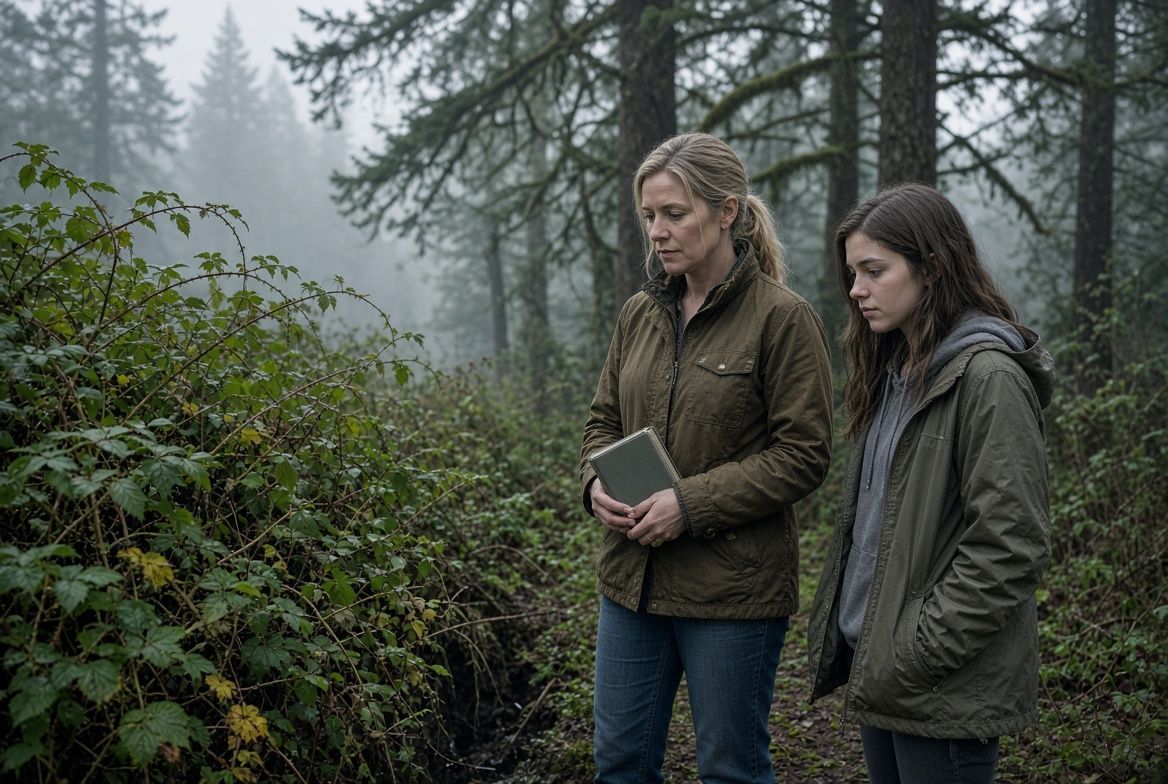
Two women forging in the forest.

Hunger does not make you careful. It makes you hopeful.


That is the belief to kill early. Foraging culture sells abundance at the ditch line: free food, ancient skill, a basket on the hip. The part that does not photograph is the plant that looks like dinner and is not, the roadside sprayed last Tuesday, and the park sign that already answered your question. A household that treats the green world as an unlocked pantry will eventually eat a mistake or get asked to leave by someone whose job is the land.


This article has one job: turn foraging from a mood into a short list you can identify without guessing, harvest where it is legal, and cook like food instead of a dare.


Bottom line up front

Do not eat a wild plant you cannot name in two independent ways. Do not harvest where the rule, the owner, or the contamination is fuzzy. Do not start with mushrooms.


Build a list of five local plants you have verified in person, in your county, in the season they actually appear. Walk that list until it is boring. Boring is the skill.


If you only do one thing this week: pick one plant you already think you know — blackberry, dandelion, or whatever is honest in your place — and confirm it with a field guide on paper plus one local source (extension office, native-plant group, or a person who has cooked it for years). Eat none of it until that confirmation is dull.


What foraging is for

Foraging is a seasonal layer, not a calorie backbone. A day of berries is sugar and morale. A flush of greens is vitamins. A bag of nuts, where they exist and you may take them, is closer to real energy. None of that replaces a sack of rice you already own or potatoes you grew on purpose.


The value under pressure is different. You learn what your ground actually grows. You learn the calendar. You learn to see food that was always there and to leave the lookalikes alone. That attention is useful when the store is thin. It is not a reason to skip stored food or a garden.


On the Peninsula the ditches and clearcuts will hand you blackberries whether you trained or not. That plenty fools people. Plenty is not the same as a safe, legal list.


Identification is the whole job

A photo match on a phone is a hint. It is not a name.


Use a written field guide for your region, not a national grab-bag. Learn the family traits that matter: leaf arrangement, sap, smell, season, habitat. Confirm the same plant in more than one growth stage if you can. If two lookalikes share the habitat, you do not have an identification. You have a coin flip.


Some lookalike pairs are famous because they keep winning. Wild carrot and poison hemlock. Some onions and death camas. Early spring greens that share a ditch with something you would not feed a goat. I am not going to turn this section into a pocket key. A pocket key in a general article is how people get overconfident. Your county’s guide and a living teacher beat a paragraph on the internet.


Mushrooms are their own profession. Cap color changes. Lookalikes share woods with species that destroy a liver. If you want fungi, take a local class with people who cook what they teach, and keep that skill off your first-year list. A preparedness article that waves you into mushroom hunting is not doing you a favor.


The test for any candidate plant:


  1. You can name it.
  2. You can say what it is not.
  3. You can point to the part you eat and the part you discard.
  4. You know the season it is worth taking.
  5. You have eaten a small cooked amount when you were not hungry and nothing happened.


If any line fails, it stays on the watch list. Watching is allowed. Eating is earned.


Legal ground and contaminated ground

The plant can be edible and still be off limits.


City parks often prohibit harvest. Highway rights-of-way can be legal in one place and posted in the next. Utility corridors look empty and are not yours. Timber companies and farmers notice bags. Tribal lands and posted conservation ground are not a gray area because the berries are thick.


Ask. Read the sign. If you cannot name the owner, you cannot harvest there. A ridge road you drive every week is still someone’s ditch.


Contamination is the other closed door. Roadsides collect exhaust and whatever the county sprayed. Dog walks collect what you do not want on a salad. Industrial edges and old orchard ground can carry residues you will not taste. Creeks through town pick up more than rain. A plant that is “edible” in a book is not edible off a curb you do not trust.


Prefer: your own unsprayed lot, a neighbor who said yes, a wild patch you have watched through a season, a public area that explicitly allows berries or greens. Walk away from anything that needs a story to justify it.


Urban: edges, lots, and a smaller list

An apartment forager is working margins. Vacant lots, alley blackberries, a cemetery edge, a community orchard if it is actually public. Most of that ground is either sprayed, posted, or both.


Your cleanest urban path is often the one you planted or the one on a property you control: a dandelion lawn you stopped treating, a rosemary shrub someone ignored, a linden or a known fruit tree on permitted ground. That sounds less wild. It also does not put you in a hospital or a manager’s office.


If you forage in the city, keep the list shorter and the cooking thorough. Wash like you mean it. Cook greens. Do not make a raw trailside salad your first practice.


People will watch you. A basket in a park draws a ranger or a neighbor. Have the rule in your pocket, not a speech about ancestral rights.


Rural: more food, more owners

Rural ground looks like permission. It is usually the opposite: more private parcels, more livestock forage you must not raid, more timber gates.


Get permission in a sentence you could repeat to a deputy. Hunt and forage ethics overlap here. You do not cross a fence because the patch is good. You do not strip a patch to the wood. You leave enough that the plant is still there next year and that someone else is not walking into a barren ditch because you had a project.


Seasonality is sharper outside town. Spring greens, summer berries, fall nuts and fruit. Learn the two weeks that matter for each item on your list. A calendar on the fridge is more useful than a laminated chart of forty plants you do not know.


Watch livestock and game pressure. If the deer already hammer a patch, you are not the first harvester. If cattle use the ditch, skip it.


From plant to meal

Foraging fails in the kitchen as often as in the field.


Take only what you will process today. Wilted mystery greens in a crisper are how people talk themselves into eating something they are no longer sure about. Label the bag with the name and the place. If you cannot label it, you should not have picked it.


Cook the first servings. Heat solves some problems and does not solve others; it is still the adult way to meet a new plant. Try a small amount. Do not serve a first-time wild green as the only thing on a child’s plate.


Preserve only the species you already eat without drama. Berries become jam or dry if you have the method. Greens freeze if you blanch them and you still have a freezer. Do not invent a 30-day wild-food ration out of a species you met last Tuesday.


Mistakes and tradeoffs

The first mistake is list inflation. Forty plants in a notebook, zero in muscle memory. Five plants you can find in the rain are a system. Forty plants you need a signal for are a hobby.


The second is treating public land as a warehouse. Overharvest is how patches die and how rules get tighter for everyone after you.


The third is contamination denial. “It looked healthy” is not a lab test. When in doubt, leave it.


Tradeoffs: foraging can pay this week; gardening pays with a name on the packet. Foraging costs almost no money and a lot of judgment. A bad identification is not a failed tomato. It is a medical problem.


Do not do this: crowd-source an ID from a photo while you are already chewing. Do not do this: teach kids that every pretty berry is a lesson. Do not do this: post your favorite unposted patch to a thousand strangers and then act surprised when it is gone.


What to do this week

Get a regional field guide you can mark up. Paper. The phone is backup.


Write five candidate plants that grow where you already walk. For each, write: name, what it is not, legal place you could take it, season, part eaten.


Then walk once with the guide and no bag. Find the plant. Confirm it. Leave it. Repeat until the walk is dull.


Only after that dull walk do you harvest a small amount of the one plant that cleared every line. Cook it. That is the test. If you cannot finish that test without reaching for an app mid-chew, foraging is not your first calorie path. Garden instead, then come back.


The woods will still be there. They do not owe you a meal because you were hungry. They owe you nothing. You owe the household a name you can defend.


Preparedness is only the beginning. The Ridge Plan explores what happens when stored supplies are no longer enough—and ordinary neighbors must turn preparation into decisions, trust, and survival.

Mountain House Beef Potato Hash
By R.T. Fagan September 6, 2026
Serves 2 · ≈1,000 cal each Ingredients 2 servings Mountain House diced beef, rehydrated 3 cups rehydrated Augason Farms potato shreds or slices 4 Tbsp vegetable oil or olive oil ½ cup rehydrated Augason Farms spinach flakes ½ cup rehydrated diced carrots 5 garlic cloves, minced Smoked paprika, cumin, salt, black pepper Method Heat oil in a cast-iron skillet over the coals. Add potatoes in a single layer. Let them crisp before stirring. Add garlic, beef, carrots, and spices. Cook 5–6 minutes. Fold in spinach at the end so it wilts into the hash. Nutrition (full meal / per person) Calories: ≈2,010 / 1,005 Protein: ≈66 g / 33 g Carbs: ≈160 g / 80 g Fiber: ≈14 g / 7 g Significant vitamins/minerals: Protein, iron and zinc (beef), potassium (potatoes), vitamin A and C (carrots/spinach), calorie-dense oil More recipes and additional bonus material can be found at https://www.griddownfiction.com/bonus-material
Fire-Pot Ramen with Chicken, Egg & Broccoli
By R.T. Fagan September 5, 2026
Serves 2 · ≈1,000 cal each Ingredients 6 bricks Top Ramen (seasoning packets optional / use sparingly) 2 cans canned chicken, drained 2 servings powdered eggs, rehydrated and scrambled 4 Tbsp vegetable oil 1 cup rehydrated Augason Farms broccoli florets 4 garlic cloves, minced Broth if available, chili flakes, black pepper, optional soy sauce Method Cook ramen in a pot over the fire until just tender. Drain most of the water, leave a little. In a skillet, heat oil. Sauté garlic, then scramble the powdered eggs and set aside. Add chicken and broccoli to the oil. Heat through. Combine noodles, eggs, chicken, and broccoli. Toss with remaining oil. Season. Nutrition (full meal / per person) Calories: ≈2,030 / 1,015 Protein: ≈68 g / 34 g Carbs: ≈195 g / 98 g Fiber: ≈10 g / 5 g Significant vitamins/minerals: Protein from chicken and eggs, vitamin C and K (broccoli), B-vitamins (noodles), fats from oil for calorie density More recipes and additional bonus material can be found at Https://www.griddownfiction.com/bonus-material
Creamed Corn Chicken & Rice Skillet
By R.T. Fagan September 4, 2026
Serves 2 · ≈1,000 cal each Ingredients 2 cans canned chicken, drained 3 cups cooked brown or white rice 1 can cream corn 4 Tbsp extra-virgin olive oil or vegetable oil ½ cup rehydrated Augason Farms broccoli florets 4 garlic cloves, minced Salt, black pepper, paprika, dried thyme Method Heat oil in a large skillet over the fire. Sauté garlic 30 seconds. Add chicken and broccoli. Cook 2 minutes. Stir in cream corn and rice. Simmer until thick, creamy, and hot. Adjust seasoning. Nutrition (full meal / per person) Calories: ≈2,000 / 1,000 Protein: ≈70 g / 35 g Carbs: ≈180 g / 90 g Fiber: ≈12 g / 6 g Significant vitamins/minerals: High protein and niacin (chicken), vitamin C (broccoli), B-vitamins (rice), vitamin A (corn), calorie-dense oil 
Black Bean Burger Skillet with Corn & Potatoes
By R.T. Fagan September 3, 2026
Serves 2 · ≈1,000 cal each Ingredients 2 servings Augason Farms black bean burger (prepared per package) 2 cups cooked or rehydrated Augason Farms potato slices or shreds 1 cup kernel corn or cream corn 4 Tbsp extra-virgin olive oil or vegetable oil ¼ cup Augason Farms cheese blend powder ½ cup rehydrated spinach flakes (optional) 4 garlic cloves, cumin, smoked paprika, chili powder, salt Method Heat oil in a cast-iron skillet over medium coals. Brown the black bean burger mix, breaking it into crumbles. Add garlic, spices, potatoes, and corn. Cook 6–8 minutes, stirring so the potatoes crisp on the edges. Sprinkle cheese powder and fold in spinach. Heat until the cheese melts into the skillet. Nutrition (full meal / per person) Calories: ≈2,000 / 1,000 Protein: ≈58 g / 29 g Carbs: ≈200 g / 100 g Fiber: ≈28 g / 14 g Significant vitamins/minerals: High fiber and folate (black beans), potassium (potatoes), vitamin A (corn/spinach), calcium (cheese powder), healthy fats from oil More recipes and additional bonus material can be found at https://www.griddownfiction.com/bonus-material
Baked Bean, Green Bean & Chicken Garlic Skillet
By R.T. Fagan September 1, 2026
Serves 2 · ≈1,000 cal each Ingredients 2 cans baked beans 1–2 cans canned chicken, drained 1 can cut green beans, drained 4 Tbsp extra-virgin olive oil 5 garlic cloves, minced 1 cup cooked rice (optional stretcher if you want extra bulk) Smoked paprika, black pepper, chili flakes, salt Method Heat olive oil in a deep skillet or Dutch oven over the fire. Sauté garlic 30 seconds. Add chicken and green beans. Heat 2 minutes. Stir in baked beans. Simmer until thick and bubbling. Fold in rice if using. Taste and add heat.  Nutrition (full meal / per person) Calories: ≈2,000 / 1,000 Protein: ≈72 g / 36 g Carbs: ≈175 g / 88 g Fiber: ≈24 g / 12 g Significant vitamins/minerals: High fiber (baked beans), protein (chicken + beans), vitamin K and C (green beans), lycopene if sauce is tomato-based, healthy fats from olive oil More recipes and additional bonus material can be found at https://www.griddownfiction.com/bonus-material
minced Clam Garlic Tomato Pasta
By R.T. Fagan September 1, 2026
Serves 2 · ≈1,000 cal each Ingredients 12 oz dry pasta 2 cans minced clams, drained (reserve a little liquid) 1½ cups tomato sauce or tomato chunks & garlic 5 Tbsp extra-virgin olive oil 1 cup rehydrated Augason Farms spinach flakes or broccoli 6 garlic cloves, minced Salt, black pepper, red pepper flakes, dried oregano Method Boil pasta in salted water over the fire. Drain, save ½ cup pasta water. In a skillet, heat olive oil. Sauté garlic 30 seconds. Add tomato sauce, clams, reserved clam liquid, and greens. Simmer 3–4 minutes. Toss in pasta and a splash of pasta water until glossy. Season well. Nutrition (full meal / per person) Calories: ≈2,010 / 1,005 Protein: ≈64 g / 32 g Carbs: ≈185 g / 92 g Fiber: ≈16 g / 8 g Significant vitamins/minerals: Iron, B12 and selenium (clams), lycopene and vitamin A (tomato), vitamin K/C (greens), monounsaturated fats and vitamin E (olive oil) More recipes and additional bonus material can be found at https://www.griddownfiction.com/bonus-material
Pulled Pork Pineapple Fried Rice
By R.T. Fagan September 1, 2026
Serves 2 · ≈1,000 cal each Ingredients 2 cans pulled pork, drained 4 cups cooked jasmine or long-grain rice (day-old best) 1 can pineapple chunks, drained (reserve 2 Tbsp juice) 5 Tbsp coconut oil or vegetable oil 1 cup rehydrated Augason Farms diced carrots or veg medley 6 garlic cloves, minced Salt, black pepper, chili flakes, optional soy sauce Method Heat 3 Tbsp oil in a wok or cast-iron skillet over the open fire. Add garlic and flash-fry 20 seconds. Add rice and break up clumps. Fry 3–4 minutes until it picks up color. Stir in pulled pork, pineapple, reserved juice, and vegetables. Add remaining oil. Cook until hot and slightly caramelized. Season hard. Nutrition (full meal / per person) Calories: ≈2,020 / 1,010 Protein: ≈62 g / 31 g Carbs: ≈190 g / 95 g Fiber: ≈12 g / 6 g Significant vitamins/minerals: Vitamin C (pineapple/carrots), B-vitamins and iron (pork + rice), vitamin A (carrots), calorie-dense fats from oil More recipes and additional bonus material can be found at https://www.griddownfiction.com/bonus-material
Black cast-iron pot of bubbling stew over an open flame with a golden crust on top
By R.T. Fagan August 21, 2026
Serves 2 · ≈1,000 cal each Ingredients 2 cans chili con carne with beans 1 box or package corn bread mix (prepared with water + 2 Tbsp vegetable or olive oil) 3 Tbsp extra-virgin olive oil 1 cup rehydrated kernel corn 4 garlic cloves, extra chili powder, cumin, salt Method Heat olive oil in a Dutch oven or deep cast-iron skillet over the open fire. Sauté garlic. Add chili + corn; simmer 5 minutes. Prepare cornbread batter (add oil for richness). Pour batter over the chili. Cover tightly and cook over low coals or with coals on the lid until the cornbread is set and golden.  Nutrition (full meal / per person) Calories: ≈2,020 / 1,010 Protein: ≈55 g / 27 g Carbs: ≈230 g / 115 g Fiber: ≈25 g / 12 g Significant vitamins/minerals: High fiber & protein (chili/beans), vitamin A & lycopene, healthy fats (olive + vegetable oil), iron
A pot of bubbling fruit dessert cooking over an open campfire, with steam rising and flames below.
By R.T. Fagan August 21, 2026
Serves 2 · ≈1,000 cal each Ingredients 3 cups dry oatmeal 4 Tbsp peanut butter 3 Tbsp coconut oil ½ cup raisins + ½ cup rehydrated Augason Farms mixed fruit / blueberries / sliced apples 2 Tbsp honey or maple syrup Pinch salt, cinnamon, optional powdered milk for creaminess Method Cook oatmeal in water (or reconstituted milk) in a pot over the open fire until thick. Stir in coconut oil and peanut butter until melted and creamy. Fold in fruit and raisins. Sweeten and spice. Serve hot from the fire.  Nutrition (full meal / per person) Calories: ≈2,000 / 1,000 Protein: ≈50 g / 25 g Carbs: ≈220 g / 110 g Fiber: ≈28 g / 14 g Significant vitamins/minerals: High healthy fats & vitamin E (peanut butter + coconut), potassium & antioxidants (fruit/raisins), sustained energy from complex carbs + soluble fiber
Black cast-iron pot simmering over flames, filled with dark stew and chunks of vegetables.
By R.T. Fagan August 21, 2026
Serves 2 · ≈1,000 cal each Ingredients 1 cup dry Clear Creek red lentils 1 can (or 2 cups) black beans 1–2 servings Mountain House diced beef (rehydrated) 4 Tbsp coconut oil 1 cup rehydrated Augason Farms potato shreds or slices ½ cup rehydrated spinach or veg medley 5 garlic cloves, cumin, smoked paprika, bay leaf, salt, chili Method Simmer lentils in water/broth over the fire until soft (15–20 min). In the same pot melt coconut oil; add garlic + spices. Stir in beef, black beans, potatoes, and greens. Simmer 5 more minutes until thick and bubbling over the flames.  Nutrition (full meal / per person) Calories: ≈2,010 / 1,005 Protein: ≈78 g / 39 g Carbs: ≈175 g / 87 g Fiber: ≈35 g / 17 g Significant vitamins/minerals: Extremely high fiber & iron (lentils + beans), vitamin A & C (greens), MCTs (coconut oil), zinc & B-vitamins