By R.T. Fagan
•
October 14, 2026
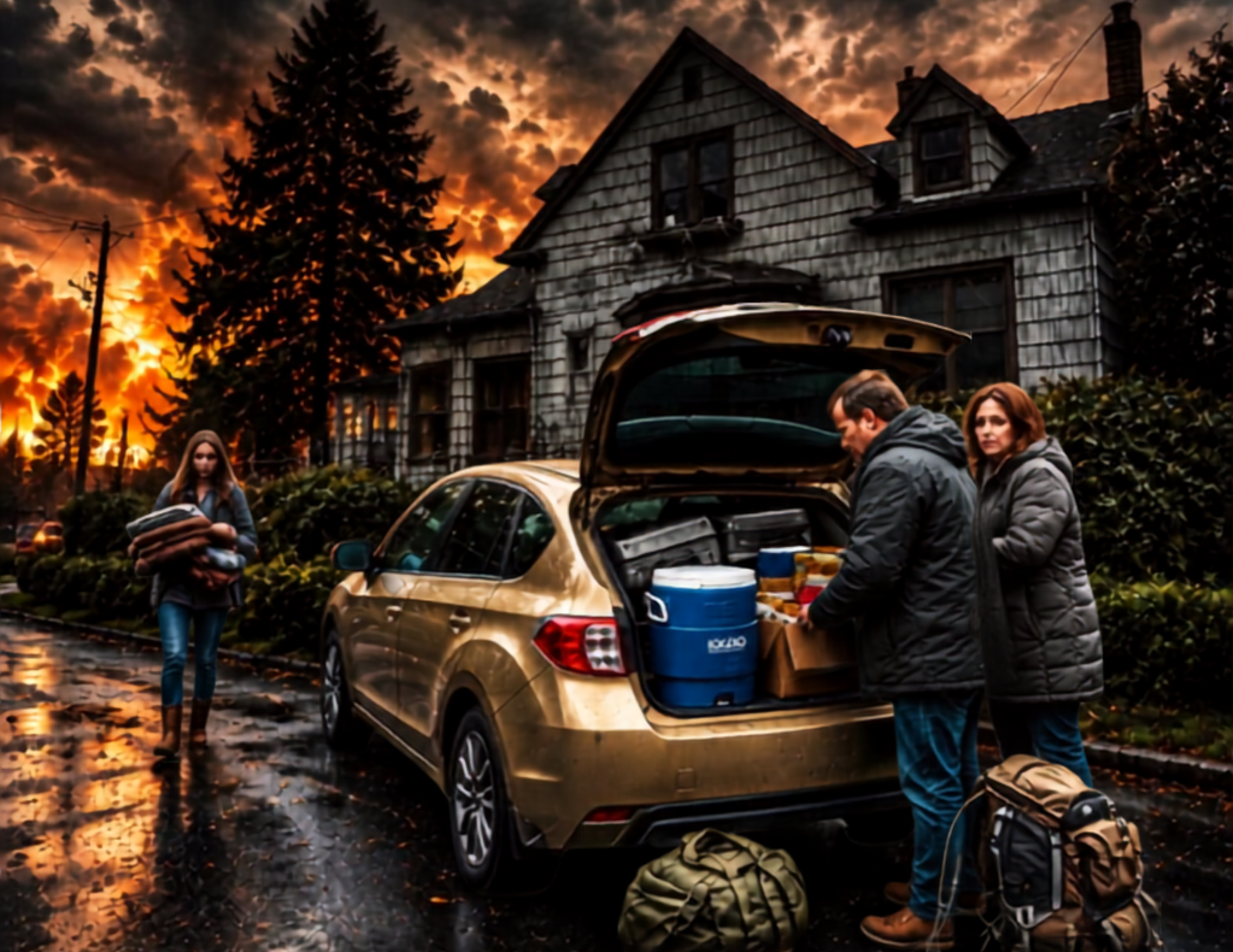
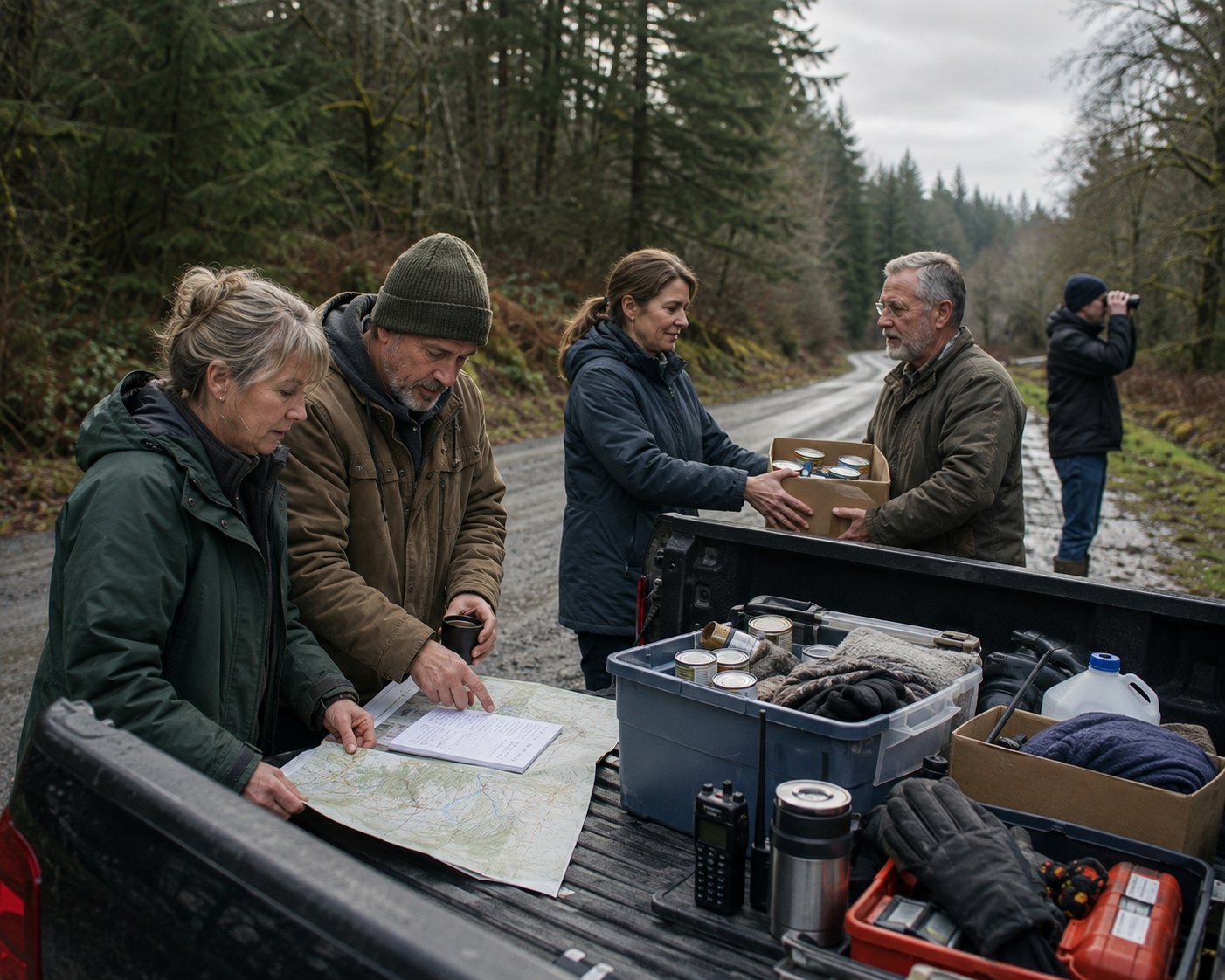
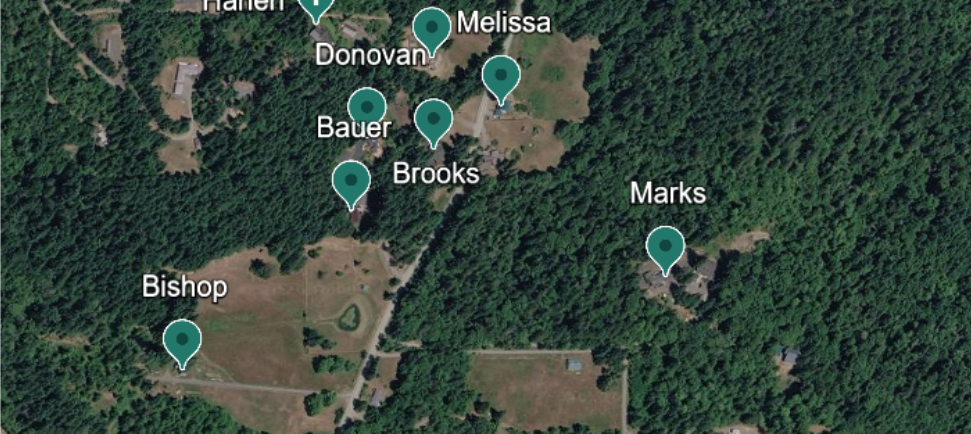
A major review of 47 studies on public responses to power outages found that panic was unlikely and helping behavior would probably outweigh criminal behavior. Losing communications—and not knowing what happened or when power would return—was a major source of stress. But there is an important limit: we have evidence from blackouts and prolonged disasters, not a direct modern example of the entire United States spending a year without electricity. Federal infrastructure advisers explicitly describe catastrophic outages lasting weeks or months across multiple states as events beyond modern experience. The longer we game this out, the more we are making informed projections. For this scenario, I’ll assume: A widespread, sustained outage affecting several states or more. No dependable electricity in the community, including sustained backup generation. Severe disruption to water, sewage, communications, fuel, payments, and deliveries. Some outside assistance may arrive, but it cannot reliably meet everyone’s needs. People initially have no reliable restoration date. That is substantially harsher than an ordinary storm outage. First, three findings that should shape the whole scenario: Cooperation and conflict can happen simultaneously. People can share meals with neighbors while distrusting outsiders. A community can organize effective relief while individual households conceal supplies. Violence is possible immediately; it does not require prolonged hunger. New York’s 1977 blackout produced extensive looting during an outage lasting roughly a day. Its contrast with other blackouts shows why local circumstances matter more than a universal timetable. Infrastructure failure creates the pressure. Electricity supports water treatment, fuel distribution, healthcare, and food supply. Backup systems themselves depend on maintenance and resupply. People’s behavior will depend heavily on which of these services remain available. The following stages are planning projections, not scientifically established deadlines. At 72 hours: Most people are still trying to restore their normal lives. The dominant questions are likely to be: How widespread is this? Where is my family? When is it coming back? Likely behavior: Repeated attempts to get information, contact relatives, and find functioning stores. Checking on neighbors, sharing cooking facilities, and helping people with immediate needs. Buying or collecting more supplies wherever possible. Delaying major decisions because restoration still seems imminent. Uneven recognition of danger: one household treats it as an inconvenience while another already faces a medical or water emergency. Research on emergency survivors supports the idea that experiencing a common threat can create a shared identity and encourage mutual help, including between strangers. The likely neighborhood tension: A prepared household starts conserving immediately. Another considers that excessive and expects everything to be working tomorrow. Some people will make consequential mistakes through optimism or lack of information. Others will act competently without having considered themselves “preppers.” There is no reason to expect everyone to recognize the seriousness at the same time. At one week: The emergency begins reorganizing daily life. The dominant question becomes: How do we keep doing this? Obtaining water, preparing food, managing waste, caring for dependents, and finding information now take substantial time. Likely behavior: Households consolidate into places with usable heat, water, or cooking facilities. Informal organizers emerge: the person who checks every house, coordinates transport, or knows where supplies are available. Family networks activate. Some people leave for relatives; others receive relatives. Rumors gain influence because reliable information is scarce. Disagreements develop over contributions, access, and whether to stay. These kinds of adaptations were observed after Hurricane María. A community case study documented face-to-face coordination, emerging neighborhood leaders, and collective arrangements for supplies and assistance when normal communications failed. That community also received outside support, so it is an imperfect comparison to our harsher scenario. The likely neighborhood tension: “We have been supplying the cooking fuel all week. What happens when ours runs out?” Generosity can continue. However, continuing cooperation increasingly requires agreements about work and resources. A week without safe water could already be disastrous. A week with dependable water, sanitation, food, and shelter could remain orderly. At one month: Temporary arrangements need rules that people accept. The dominant question becomes: Who makes decisions, and are those decisions fair? Under our assumptions, this is already a humanitarian emergency. People cannot indefinitely improvise around failed water, food, and medical systems. Likely behavior: More explicit rationing and work schedules. Arguments about unequal effort and unequal need. Greater concern about newcomers and additional dependents. Private reserves, concealed consumption, and accusations of favoritism. Departures from communities that cannot sustain their populations. Exhaustion among the people who have been organizing everything. Consider a plausible dispute: one household contributed most of the food; another supplies most of the labor; a third includes someone who needs extensive care. All three may have reasonable but incompatible ideas about fairness. That is a credible source of conflict without anybody suddenly becoming evil. Medical disruption also changes behavior through grief, fear, and caregiving demands. In a household survey after Hurricane María, respondents attributed approximately one-third of reported deaths to delayed or interrupted medical care. Those were consequences of the broader disaster, not electricity loss alone. At this stage, I would expect diverging communities : some maintain cooperation, some fragment, and some become dependent on whoever controls access to essential resources. At three months: The central issue becomes whether people can see a viable future. The dominant question becomes: Can we sustain this place—or must we leave? Without adequate supplies or assistance, a community cannot reach this point merely by becoming accustomed to hardship. It needs functioning ways to obtain water, calories, shelter, sanitation, and care. Where those exist, plausible behavior includes: Established routines and more specialized work. Shared childcare, meals, repairs, and support for vulnerable residents. Exchange between households and neighboring communities. Leadership based increasingly on demonstrated usefulness and trust. Continued disagreement about outsiders, obligations, and scarce supplies. Where essentials remain inadequate, expect stronger pressure toward displacement, family separation, exploitative exchanges, and conflict over access. Migration deserves at least as much attention as violence. Census data documented substantially increased movement from Puerto Rico to the mainland in the year after María. That does not isolate electricity’s effect, but it shows that people respond to prolonged disruption by relocating—not simply remaining in place and becoming more aggressive. The likely neighborhood tension: A household wants to leave and take the tools, food, or equipment that everyone has come to depend on. That dispute concerns ownership, survival, and freedom to leave—all at once. At six months: Exhaustion and unequal recovery can reshape relationships. The dominant question becomes: Why are we still living this way, and who is responsible? A plausible functioning community now has considerable practical experience. Its members may also be carrying bereavement, physical wear, lost income, interrupted education, and months of uncertainty. Possible behavior: Strong loyalty within dependable working groups. Resentment toward leaders, perceived noncontributors, or better supplied communities. Withdrawal by people who previously volunteered constantly. Attempts to reconnect with wider trade, relief, or government networks. Greater acceptance of restrictions if people believe they are necessary—and resistance if they appear arbitrary. Adaptation does not guarantee emotional recovery. A longitudinal Katrina study found that several mental health outcomes worsened between assessments conducted 5–8 months after the hurricane and approximately one year later. That is evidence about prolonged disaster stress, not a forecast that everyone deteriorates psychologically. Season now matters enormously. Six months beginning in January presents different problems from six months beginning in July. A garden produces food according to growing conditions, labor, and time—not according to when the pantry empties. The likely neighborhood tension: The dependable organizer finally says, “Someone else has to take this over.” A community that depends on a few exhausted individuals has a serious weakness even if its supplies remain adequate. At one year: We are examining a changed society, with very limited predictive confidence. The dominant question becomes: What arrangements can support life indefinitely? A year without dependable electricity across a large modern population would require profound changes in settlement, production, transport, healthcare, and governance. Research cannot supply a defensible universal death percentage or a single expected social outcome. Three broad paths are plausible: Condition: Essentials are available; decisions are accepted as fair Plausible social development: Durable cooperation, shared services, local exchange, and continuing links to wider institutions Condition: Essentials exist, but access is controlled by an unaccountable group Plausible social development: Dependency, favoritism, coercion, and resistance Condition: Essentials remain insufficient Plausible social development: Continued displacement, preventable deaths, household fragmentation, and possible abandonment Different places could follow different paths simultaneously. Daily life could include work, teaching children, celebrations, friendship, and community obligations alongside severe deprivation. People retain a much wider range of behavior than fear and aggression. Also, the people remaining after a year would not be a representative sample of the original population. Others would have left, been evacuated, or died. An apparently stable settlement might partly reflect that population change. What I would watch more closely than the calendar To judge whether a particular neighborhood is becoming more cooperative or more dangerous, I would track: Essential needs: Are people actually getting water, sufficient food, shelter, sanitation, and necessary care? Credible information: Do they understand the situation, or live on repeated rumors and failed promises? Fairness: Can people see how resources and workloads are allocated? Trust: Are agreements being honored, including by leaders? Options: Can people obtain assistance, exchange goods, or leave for somewhere demonstrably safer? Capacity: Are caregivers, organizers, and skilled workers still able to function? For a rural neighborhood, I would game out the first serious disputes around water access, additional relatives arriving, shared fuel, unequal workloads, and authority over privately owned supplies . Those are plausible pressure points, not predictions about your neighbors. For The Ridge, the strongest research-supported portrayal would allow neighbors to become more capable and more strained over time. A person can remain generous while setting limits. Another can contribute faithfully while resenting leadership. A third can become a threat early. The calendar increases exposure to hardship. What happens to behavior depends on whether people can meet their needs and still trust the arrangements holding them together.