You Do Not Need a Homestead. You Need a First Calorie Path.
How ordinary urban and rural households should rank gardening, foraging, fishing, hunting, and livestock — by space, legality, time, and neighbor friction.

The store is still open. That is why this article exists.
Most households treat food production like a personality. They buy grow lights, bookmark wild-edible charts, talk about chickens, and never decide which path they can actually carry when money, space, family buy-in, and city code are the constraints they already have. Night one of a long outage does not care about the Pinterest bed. It cares whether you already know how food gets from a patch of dirt, a ditch, a river, or a coop into a pot you can still light.
This is not a survey of skills. It is a ranking. The job is to pick one first calorie path and ignore the rest until that path has paid you something you can eat.
Bottom line up front
Do not start five food systems. Start the one your ground, your laws, and your week will support.
For most apartments and small lots, that is gardening in containers or a single bed, or a tightly limited forage list you can identify without guessing. Fishing comes next if you already have legal access to water. Hunting and trapping are not night-one skills and are not urban skills; they are licensed seasonal work on land you are allowed to use. Livestock is a daily chore with an ordinance attached. Eggs are not a calorie plan.
If you only do one thing after this article: choose a path using the test below, then run the one-week test in that path’s article. Do not buy a greenhouse, a rifle, or a flock until the test says the path is real.
The test that ranks the five paths
Before you plant, pick, hunt, fish, or build a coop, answer these in writing. Ten minutes. No gear.
- Space you control. Patio, balcony, backyard, ridge, or none. Not space you wish you had.
- Legal layer. City code, HOA, lease, state license, harvest rules in parks, trespass. If you cannot name the rule, you do not have a path yet.
- Time-to-first-meal. Days, weeks, or months. A skill that pays in October does not feed you in July.
- Daily labor. What happens if you get sick, work late, or the household refuses the chore.
- Neighbor friction. Smell, noise, visible slaughter, dogs, theft, complaints.
- Input dependence. Seed, feed, bait, fuel, water, ice, ammunition. A system that dies when the store dies is a hobby with extra steps.
- Failure mode. What spoils, what poisons, what gets you cited, what wastes the animal.
Score each path honestly. The winner is the one that clears legality and space, pays something this season, and will not start a fight on your landing.
Calories are the other filter people skip. An adult is roughly 2,000 calories a day. A household of four is 8,000. A pretty tomato is about 80 calories a pound. A potato is closer to 350. A large egg is about 70 to 80. Four hens laying well might give you 70,000 to 80,000 calories of eggs in a good year — weeks of food for one person, not a year for a family, and only if the feed keeps coming. Production is a supplement and a skill. It is not a homestead on a city lot.
Path one: gardening — default first for most households
Gardening wins first place for the largest number of readers because the permission structure is simple. If you control a railing, a stoop, a strip of dirt, or a raised bed, you can usually grow something without a license. The constraint is light, water, and what you plant.
The myth is that a garden feeds you. A 4-by-8 bed planted in lettuce and cherry tomatoes will feed your pride. Planted in potatoes, dry beans, and winter squash, the same ground starts to look like food. Honest yields vary with soil and weather, but the pattern is stable: calorie crops earn the square footage; salad crops earn the vitamins. You need both. You cannot live on either alone.
Urban. Containers on a balcony or a community plot. Watch the weight of wet soil on old decks. Watch HOA rules on visible planters. Watch water: if you are hauling jugs up three flights, you will quit in August. Grow the plants you will actually water.
Rural. You have more ground and more pests. A deer fence is not decoration on the Peninsula. Water still decides the season. A hose that depends on a well pump is a grid-tied garden whether you admit it or not.
Start here if you can keep soil wet and in sun for six hours. Skip it as your first path only if you have no outdoor space, no south window that is honest about light, and no community garden within reach. Then foraging or fishing may beat a sad indoor herb pot you will not eat.
The one-week test is in the gardening article: measure sun, pick one bed or two containers, plant a crop you will harvest this season. Not next year. This season.
Path two: foraging — first only if identification is already a habit
Foraging looks free. It is not. It costs attention, local knowledge, and the humility to walk past a plant you cannot name.
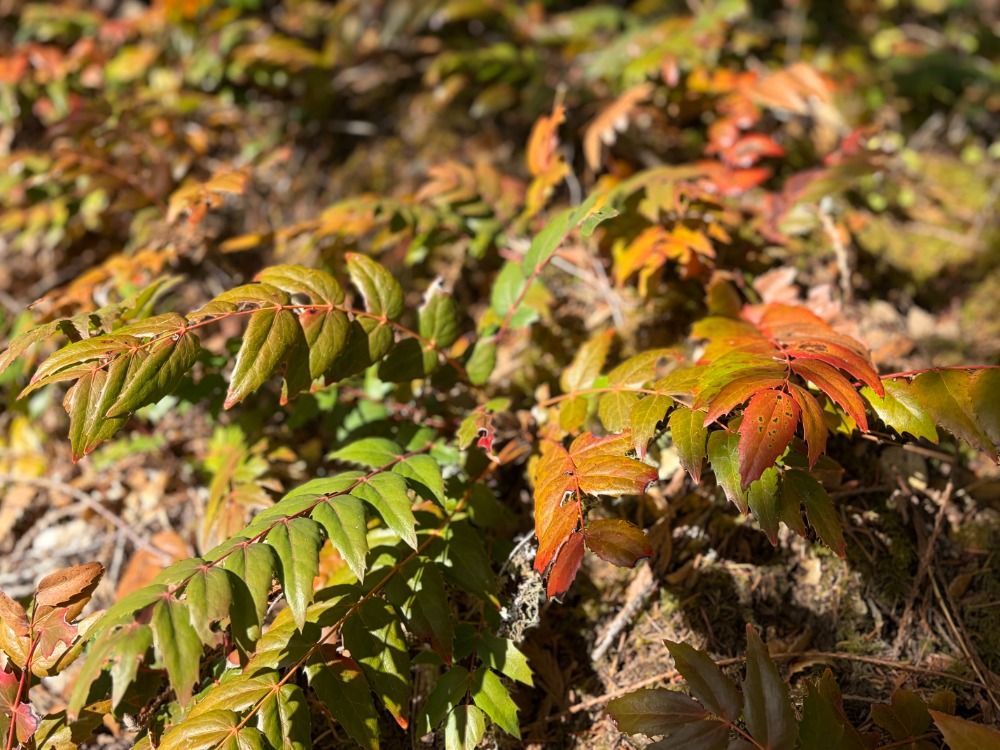
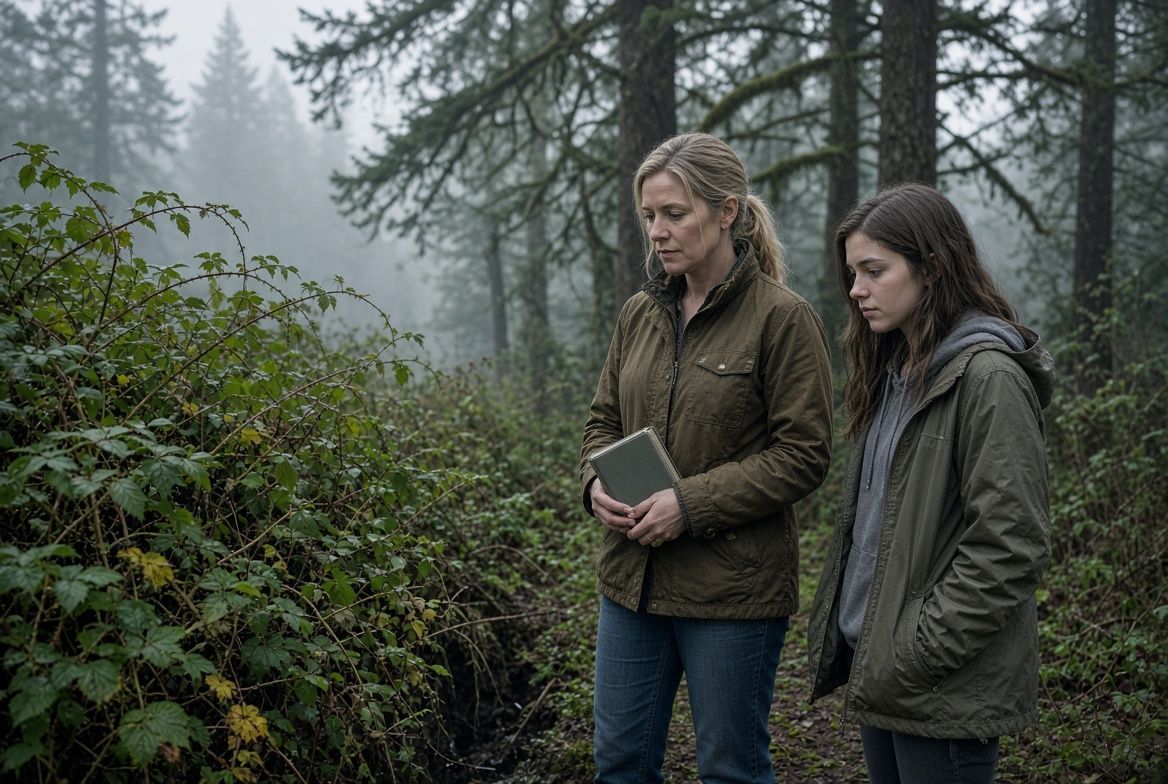
It pays fastest when you already walk the same ditches, hedgerows, and timber edges and you already know a short list cold. Blackberries on a public-right-of-way in late summer are a different activity from “I downloaded an app and I am going to eat the woods.”
The belief to challenge is that hunger makes you a naturalist. Hunger makes you sloppy. Lookalikes are how people get poisoned. Roadsides collect exhaust, herbicide drift, and dog waste. City parks often ban harvest. Private timber and farmland are not a pantry because you can see the berries from the road.
Urban. Treat foraging as a supplement and a training skill: dandelion on an unsprayed strip you have watched, a known berry patch, a tree you planted. Do not make mushrooms your first wild food. Do not make a creek through a business park your salad bowl.
Rural. More abundance, more private land, more reason to know whose ground you are on. Seasonal windows are real. A flush of greens in April is gone in June.
Start here first only if you can already identify five local edibles without the phone, you know where harvest is legal, and you have a reason the plants are not contaminated. Otherwise gardening still beats foraging as a first path, because a labeled seed packet does not impersonate poison hemlock.
Path three: fishing — first if the water is already in your life
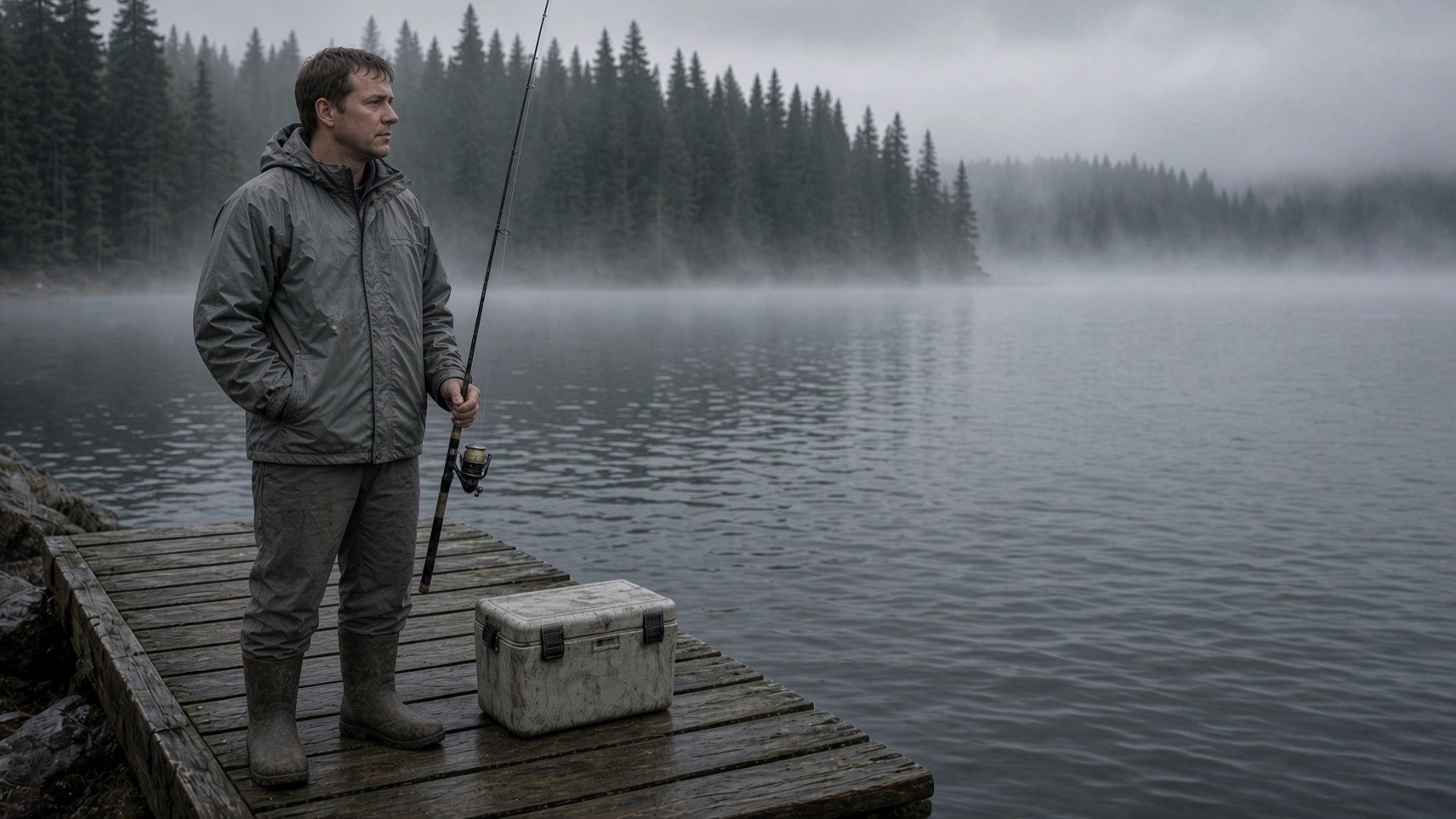
Fishing sits in the middle of this ranking because access decides everything. If you already live on a river, a sound, a reservoir, or a pier you can reach without a fantasy commute, fish can become meals this week. If “the water” is a two-hour drive and a boat you do not own, it is recreation you have renamed survival.
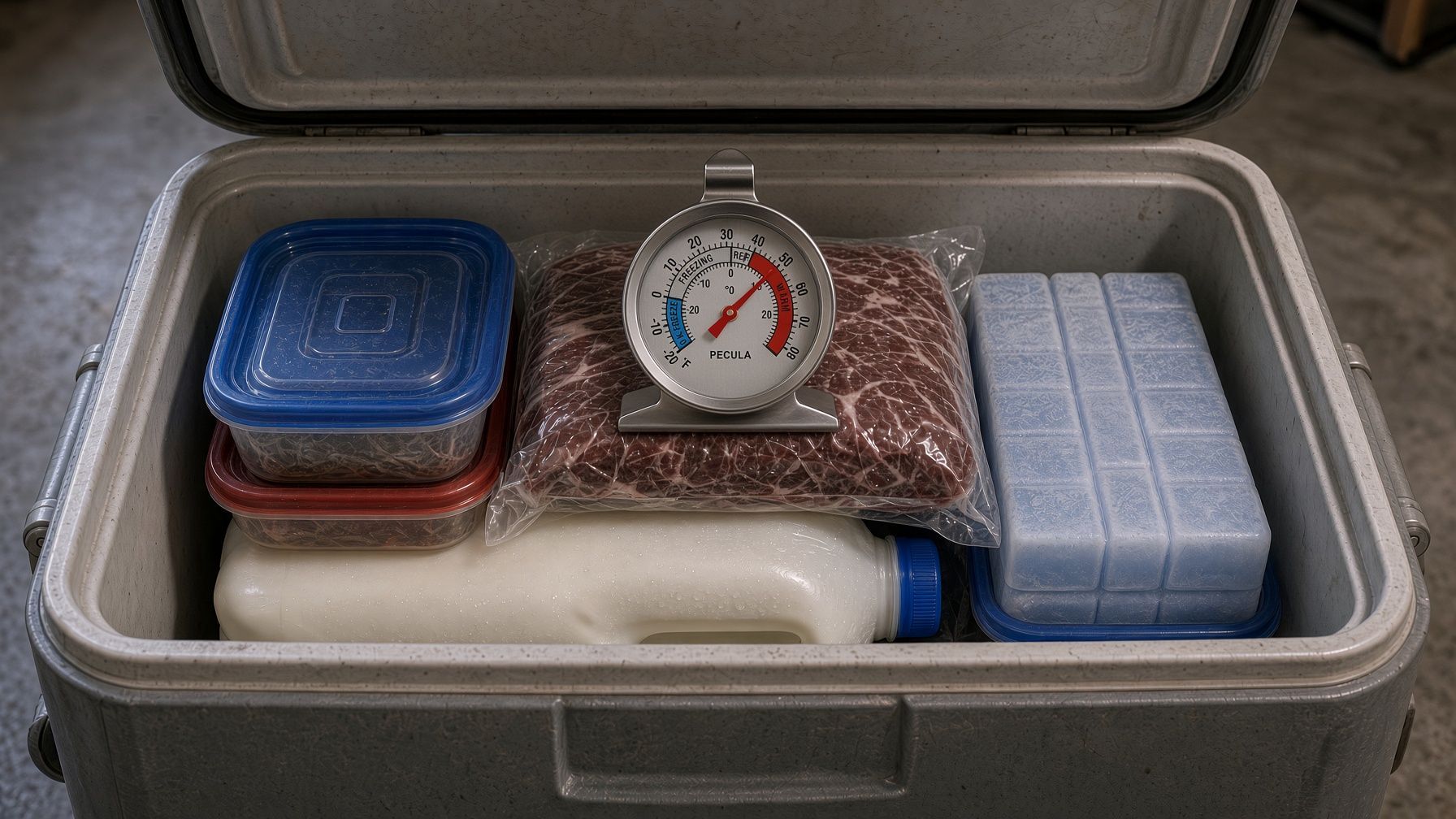
You need a license in almost every state. You need seasons, limits, and a plan for the meat when the fridge is a box. A fish you cannot keep cold is not a meal. It is a clock.
Urban. Piers, city lakes, stocked ponds, and the legal question of whether you may keep what you catch. Water quality matters. A fish from a posted industrial canal is not a flex.
Rural. Better access, still the same license, still the same cooling problem. A ridge household that can walk to a creek has a path. A ridge household that talks about the coast and never goes does not.
Start here first if you already fish, already have legal access, and can name how you will cook or preserve the next legal catch within hours. Do not start here first because you bought a rod in a burst of resolve. The fishing article is about turning access into food you can keep, not about collecting tackle.
Path four: hunting and trapping — licensed, seasonal, and usually not first
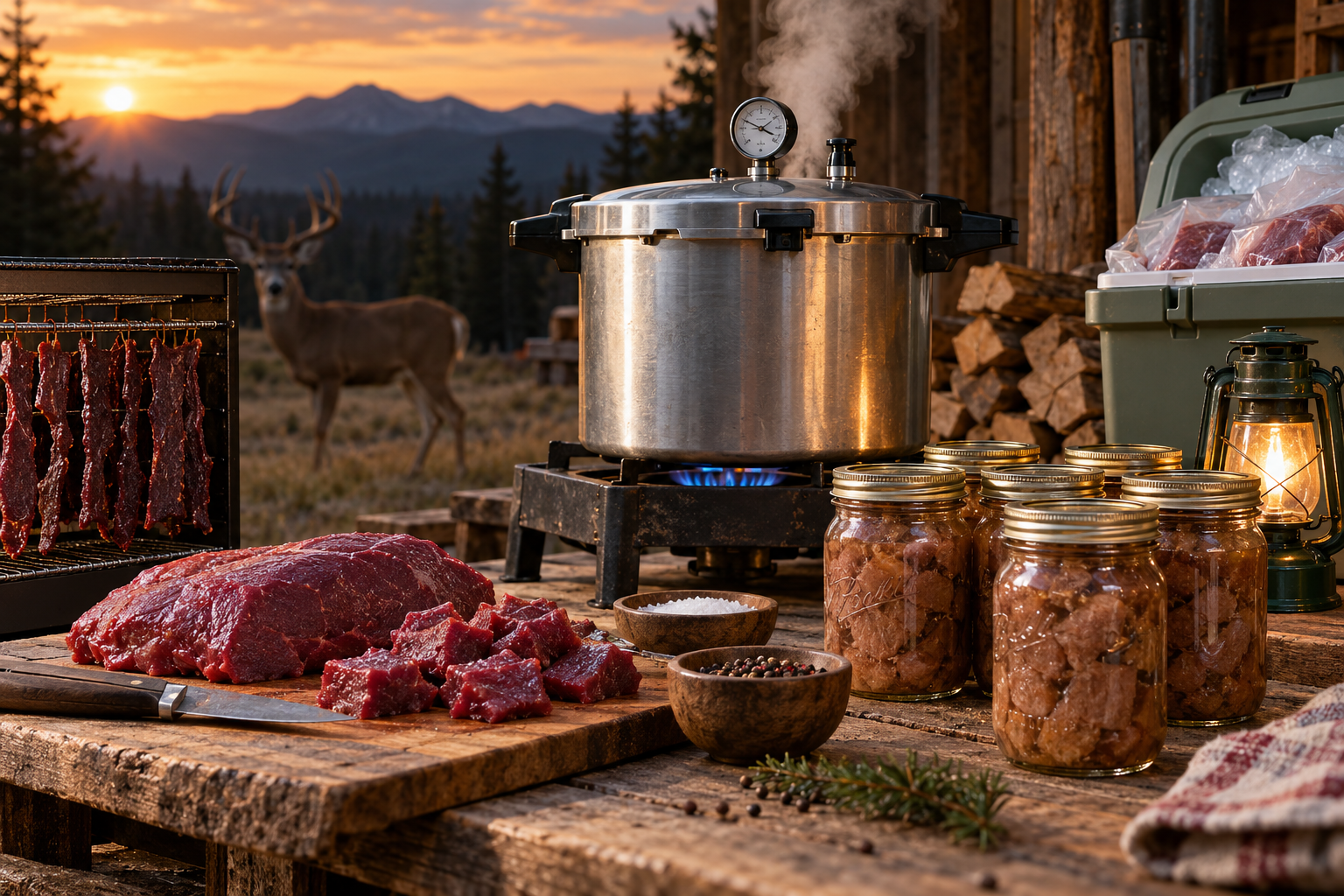
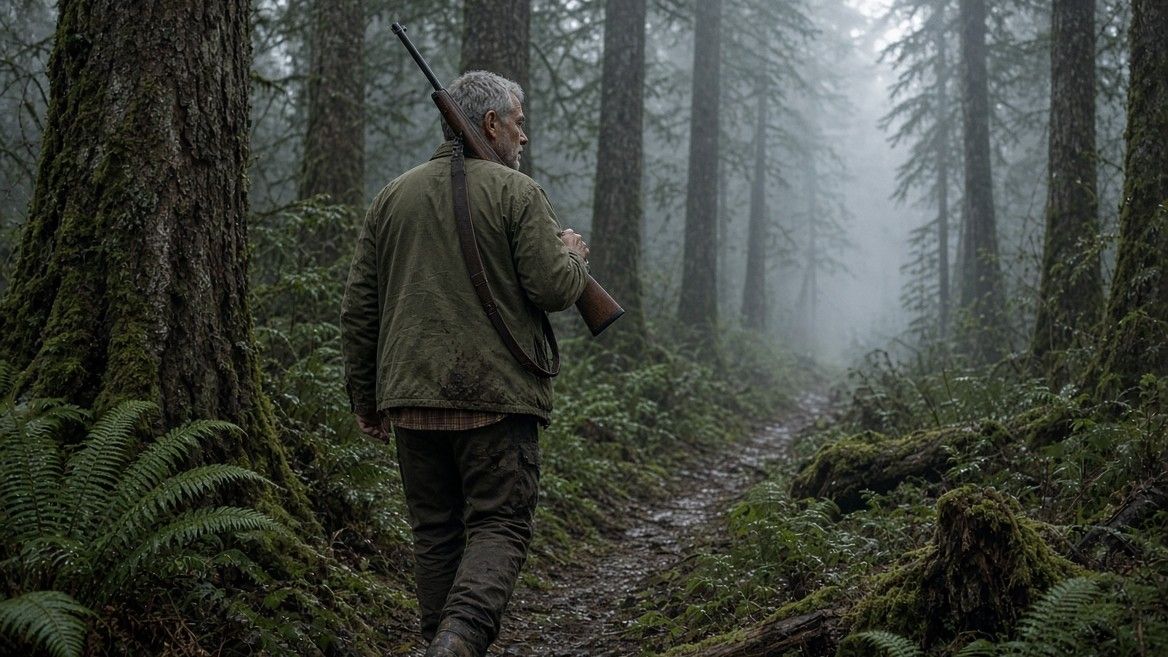
Hunting is the path prepping culture treats as identity. It is the path least available to the household that needs a first calorie this month.
Every state runs hunter education. Most require it before a license, with birth-year cutoffs and field days that vary by state. Small game, big game, and migratory birds are different paper. Trapping is usually a separate license, a separate regulation book, and in many cities it is simply not legal. Public land has rules. Private land needs permission that holds up when a sheriff asks. Fair chase and wanton-waste laws are not slogans. They are how you stay on the right side of a conservation officer.
This article series will not teach you how to build a trap or how to take an animal you are not licensed to take. That is the point. If the first sentence of your meat plan is a workaround, you do not have a plan. You have a risk.
Urban. For almost every reader in an apartment or a tight suburb, hunting is not a first path. City discharge ordinances, no access, and no place to handle meat make it a future skill you train elsewhere, legally, in season.
Rural. Possible, still not first unless you already hunt. A first season is education, access, and ethics. Meat is the dividend, not the guarantee. A bad year, a missed shot, a closed unit, or a neighbor who withdraws permission can zero the freezer.
Start here first only if you already hold the right license, already have a place you may hunt or trap, and the household will eat what you bring. Everyone else: put hunting on the list after a garden or a fish you can actually land. Take the hunter education course this year if you want the door open. That course is the test, not a catalog of methods.
Path five: animal husbandry — a system, not a mascot
Livestock is the most romanticized path after hunting, and the one that fails loudest on a city lot.
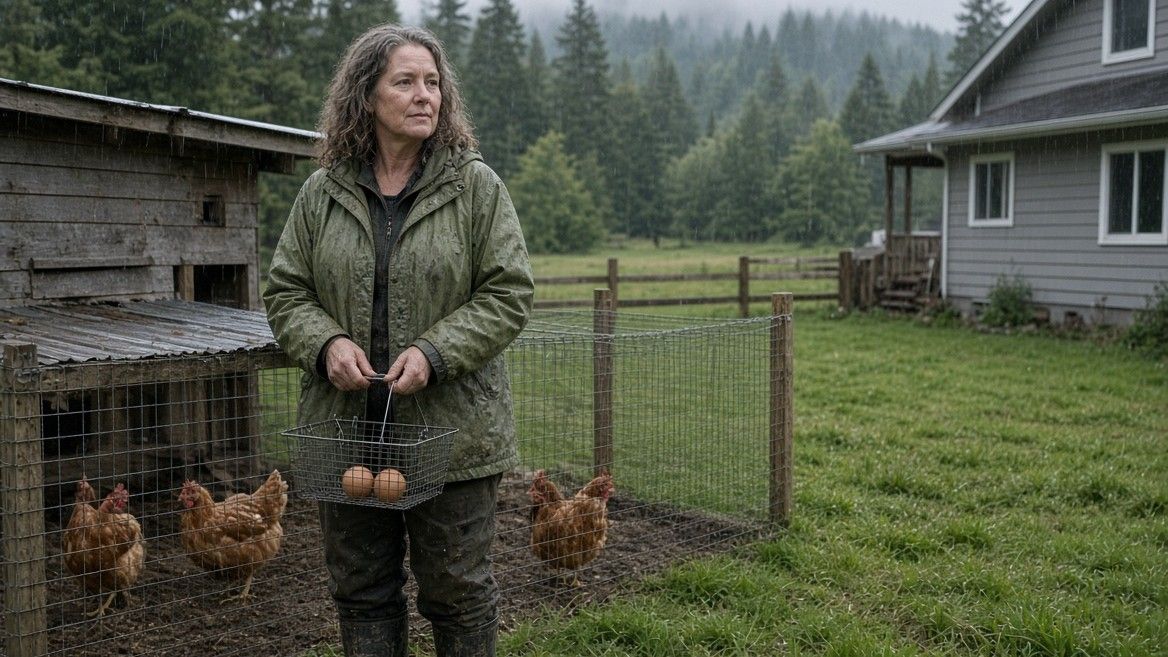
A small hen flock is legal in many U.S. cities, often four to eight hens, usually no roosters, often with setbacks of 15 to 30 feet and an HOA that can still say no after the city says yes. Eggs are excellent food. They are not a calorie backbone. The birds eat every day. When layer feed is gone, the path is gone unless you already planned the substitute and the birds will eat it.
Rabbits are quieter and convert feed to meat faster than people expect. They also require you to kill and butcher on a schedule, in a place neighbors cannot turn into a complaint. That is a household conversation, not a YouTube weekend.
Goats, pigs, and cattle are rural systems with acreage, fencing, water, and zoning. They do not belong in a first-path discussion for an ordinary household.
Urban. If hens are legal and the household wants the chore, a tiny flock can teach daily systems and give you eggs. It will not replace the store. If the lease, the HOA, or the landing full of kids makes a coop a fight, this path is closed. Closed is an answer.
Rural. You can do more. You can also overbuild a homestead you cannot staff. Five animals you neglect are not resilience. They are a welfare problem and a feed bill.
Start here first only if the ordinance is printed on your fridge, the coop site clears setbacks, and someone in the house will do the morning and evening work when you do not. Otherwise livestock waits.
How to choose in one evening
Sit at the table with the people who eat there. Not a forum. The table.
Write the five paths down the left side of a page. Across the top: space, legal, time-to-meal, daily labor, neighbors, inputs, failure. Mark each cell yes, no, or not yet.
Then apply this order. It is a default, not a religion.
- If you control sun and water, garden first.
- If you already know a legal, clean, short forage list, add foraging as a seasonal layer — not as the whole plan.
- If water is already in your week and the license is current, fish.
- If you are already licensed and have access, hunt or trap in season. If you are not, take education and leave the meat plan alone until you are.
- If hens or rabbits are legal and the household wants the work, add livestock after a garden exists. Animals do not excuse an empty bed.
A ridge household with timber, a creek, and a barn may run three of these in the same year. An apartment household may run one, well. Both can be serious. Only one of those pictures is honest for you.
Mistakes and tradeoffs
The common failure is collecting identities. Garden and forage and flock and a rifle safe, none of them past the first week. Under pressure, unfinished systems compete for the same two hours after work.
The second failure is calorie denial. People plant what photographs. They hunt what has a story. They buy chicks in April and discover in November that eggs are a side dish and feed is a supply chain. Rank food by what stores, what fills, and what you will cook when you are tired.
The third failure is skipping the legal layer because the woods feel like commons. They are not. Trespass, illegal harvest, and unlicensed take are how a preparedness plan becomes a court date. This site is about ordinary people under real constraints. A citation is a constraint you chose.
Tradeoffs are blunt. Gardening is slow and weather-owned. Foraging is fast and error-owned. Fishing depends on access and ice. Hunting depends on paper, land, and a season the calendar does not move for you. Livestock depends on daily work and a feed bag. There is no path without a bill. The question is which bill you can pay.
Do not do this: start livestock to “use the kitchen scraps” and discover the scraps do not feed the animals. Do not do this: treat an app photo as an identification. Do not do this: store a fish like a loaf of bread. Do not do this: assume rural family land is permission. Call the person whose name is on the tax bill.
What to do this week
Pick one path. Write it on the page. Cross the others out until that path has produced a meal or a clear “not yet.”
Then open the matching article in this series and run its one-week test.
- Gardening: sun hours, one bed or two pots, a crop that pays this season.
- Foraging: five named plants, harvest rules, one walk with nothing eaten until the ID is boring.
- Fishing: license, access, and the cooling plan for the next legal fish.
- Hunting and trapping: hunter education and the regulation booklet — not a gear list.
- Animal husbandry: city code, HOA, lease, and a chore roster before a crate of birds.
Ignore the rest of the internet’s homestead until that test is done. The ridge does not need another paper plan. It needs a household that already knows which food path it can carry when the store lights flicker.
This is the same pressure the Ridge books are written to take seriously: ordinary people, limited ground, no perfect plan. Start with the ground you have.
Preparedness is only the beginning. The Ridge Plan explores what happens when stored supplies are no longer enough—and ordinary neighbors must turn preparation into decisions, trust, and survival.